JBL’s Seoul exhibition shows how the listening room became portable
An 80-year display puts furniture-sized stereo and portable speakers in the same history. The useful comparison is the job each enclosure was built to do.
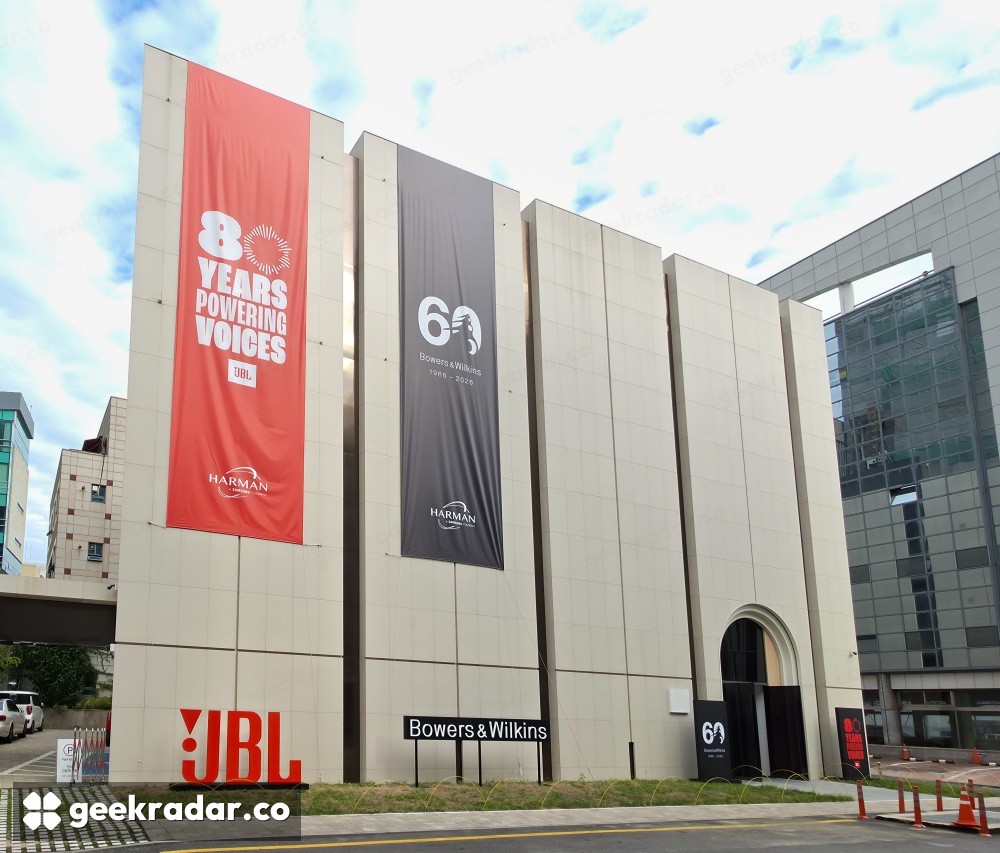
JBL’s 80th-anniversary exhibition in Seoul offers a useful way to look at audio history: watch how much space the loudspeaker occupies in someone’s life. The Playback Gallery, opening October 24 at Project Space Line and running through October 31, places products inside reconstructed domestic settings as well as contemporary listening environments.
The Samsung Newsroom preview describes a brand exhibition, not an independent listening test. Its historical objects are nevertheless revealing. A large wooden stereo cabinet, a compact home loudspeaker and a portable speaker each answer a different question about where listening happens and what a person is willing to arrange around it.
Photo: Samsung Newsroom / JBL.
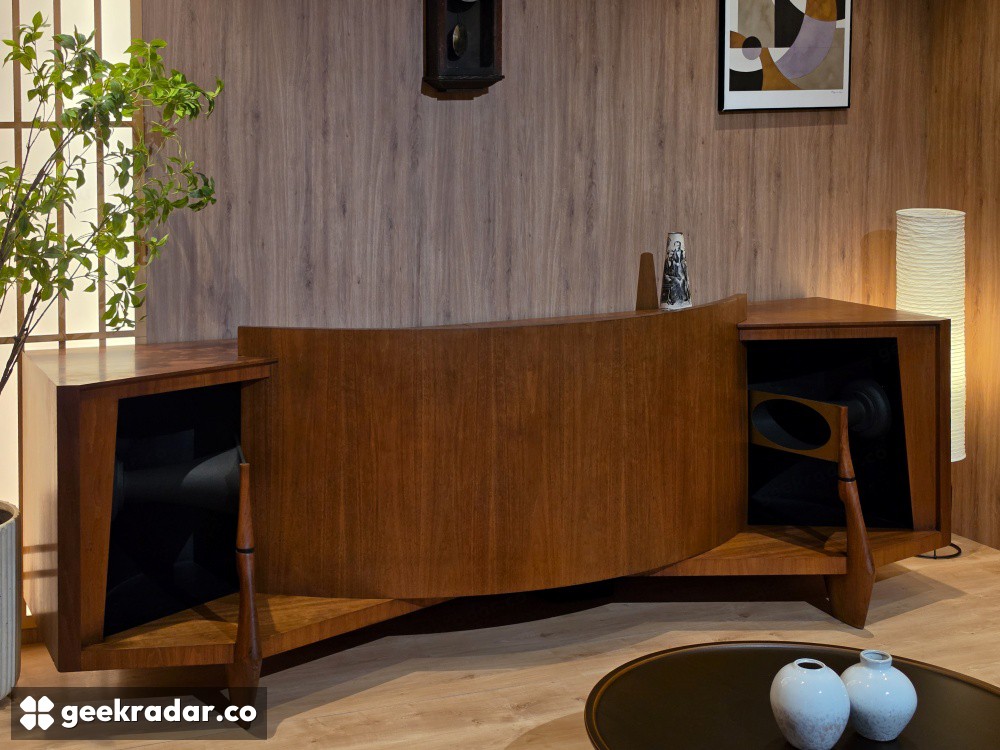
When stereo was a piece of furniture
The Paragon, introduced in 1957, combined left and right speakers in one curved cabinet. Its presence in the exhibition’s 1950s room makes the physical commitment immediately visible. This was an object around which a room could be organized, with the enclosure itself forming part of the domestic design.
The L100 Century tells a different story. Introduced in 1970 and derived from the 4310 studio monitor, it connects professional audio engineering with a form intended for the home. The exhibition uses it to illustrate movement between recording spaces and living rooms, rather than treating those markets as unrelated branches of the same brand.
Samsung’s separate 80-year timeline places that movement within the company’s broader history. The value of the display is the ability to see the objects together. It makes the change in scale and intended setting more tangible than a list of model names.
Portability changes what the enclosure has to do
Moving from a fixed listening room to everyday portable audio changes the engineering problem. A speaker that must be carried and powered away from a wall socket cannot simply inherit the size and power assumptions of a large domestic cabinet. Placement also becomes less predictable: the listener may put it wherever there is space, rather than position it carefully for a dedicated session.
That does not establish which product sounds best. It explains why comparing audio products only through a brand’s claimed house sound leaves out important constraints. The useful choice depends on the job: filling a room, listening at a desk, taking music outside or keeping it private through headphones.
The exhibition also includes current JBL products and a separate Bowers & Wilkins anniversary section. For an Italian reader, this is a design and technology story with an exhibition in South Korea; the announcement does not establish an Italian stop or local availability of every displayed model. The photographs are evidence of the show’s objects and staging, not a substitute for hearing them.
Our coverage of Bose and Skullcandy’s collaboration considered how audio expertise moves between brands and product categories. JBL’s gallery provides a longer historical version of that question: which ideas survive when the place and purpose of listening change?
A good anniversary display can make a familiar logo feel less uniform. The cabinet that once claimed a wall and the speaker that now fits in a bag share a name, but they negotiate very different relationships with the listener. That difference is more useful than treating eighty years as a single uninterrupted sound.