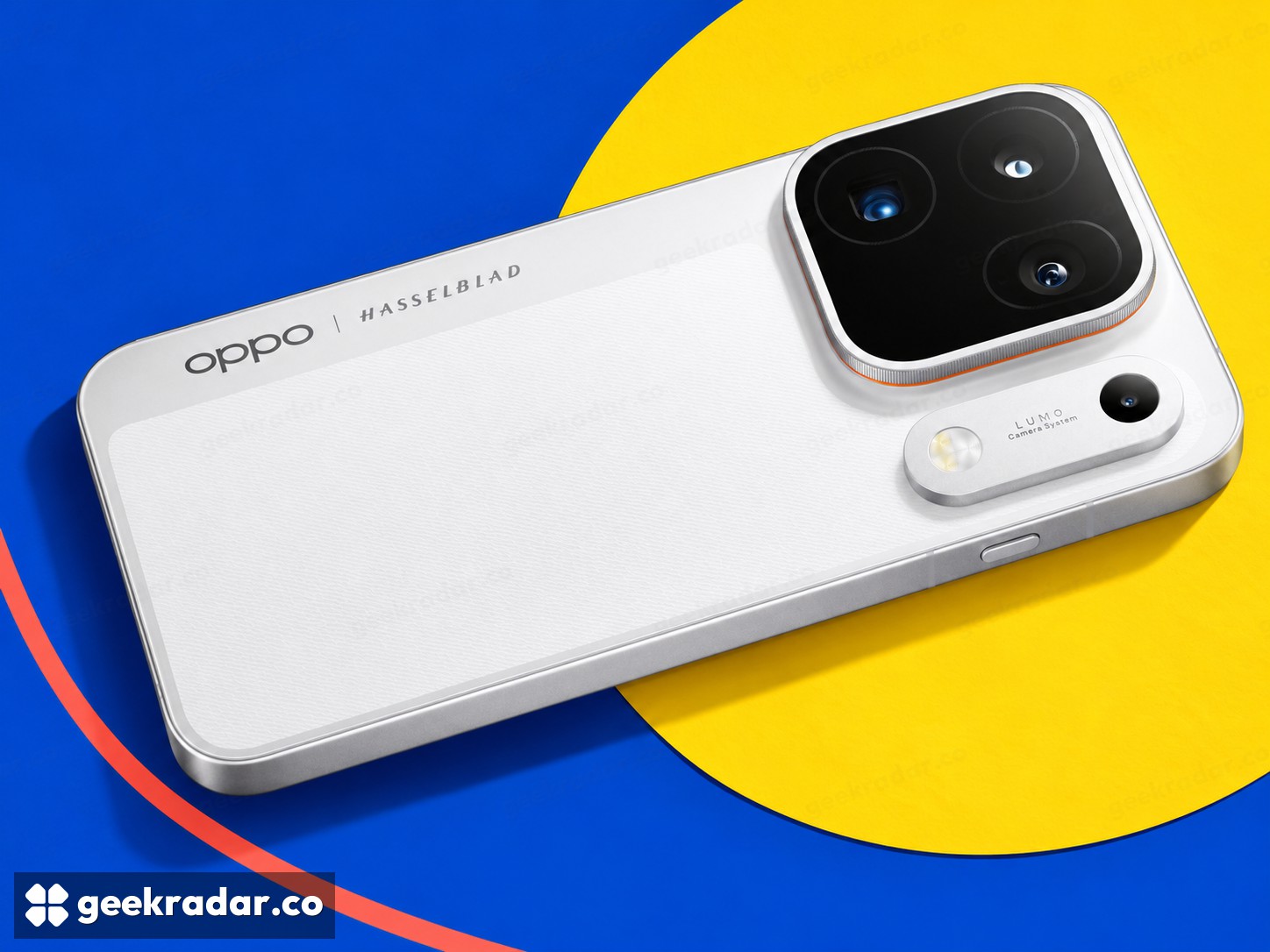
Find X10 Pro Max reaches Italy: compare the camera kit, not three pixel counts
Local pricing and specifications clarify the purchase. The teleconverter and charging setup deserve their own calculation.
OPPO’s Find X10 Pro Max now has an Italian purchase page, which turns a global launch story into a more concrete decision. The Italian store lists the 12GB/512GB phone at €1,799.99 before applicable offers. At that price, the useful comparison is the complete camera setup you would carry, charge and use—not simply the three repeated “200MP” labels.
Our earlier launch preview highlighted the importance of regional specifications. The local listing now supplies an answer: the Italian model has a typical 7,150mAh battery. A specification quoted for a different market should not silently replace it in a buying decision.
Three equal resolutions, three different cameras
The Italian camera presentation lists three rear cameras at 200 megapixels, but their optics and sensors differ. The main camera uses a 1/1.3-inch-type sensor and a 24mm-equivalent lens; the ultrawide and telephoto use 1/1.56-inch-type sensors, with 13mm- and 70mm-equivalent lenses respectively. Those optical-format labels are industry conventions, not literal measurements of a sensor’s diagonal in inches.
The repeated pixel count therefore does not make the three cameras interchangeable. A wider view changes how close you need to stand and how much of a scene fits. A longer lens changes framing from the same position. Sensor area, aperture, stabilization and processing also affect the result. None can be ranked from resolution alone.
That matters particularly if your interest is a specific kind of photograph. A concert spectator wants useful reach from a fixed seat; someone photographing a small room needs a sufficiently wide view. Both might crop afterwards, but their original framing problem is different. Three large pixel counts do not resolve that choice for them.
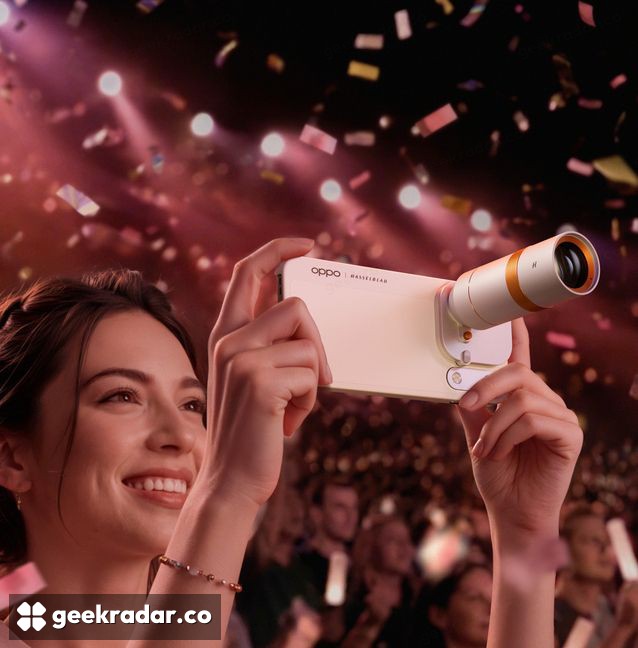
The teleconverter changes what goes in the bag
OPPO’s product presentation promotes a Hasselblad teleconverter kit. The official image shows the practical difference immediately: an external optical attachment makes this a larger setup than the phone alone. It can be relevant to someone deliberately taking photographs, while being less useful to someone whose priority is an uncomplicated pocket camera.
The Italian store currently offers an eligible launch-gift selection, including the teleconverter kit, subject to its promotion conditions. That does not make the accessory part of every standard retail box. Select and confirm the intended gift in the order; do not assume another seller or an imported variant carries the same offer. Nor should an accessory’s advertised retail value be treated as cash saved if you would not otherwise use it.
Charging is part of the system too
The Italian specifications list 80W SUPERVOOC and 50W AIRVOOC charging support. These are compatibility ceilings, not promises that any USB charger or wireless pad will deliver those rates. The listed standard box contains a USB-C cable, but does not list a power adapter. A promotional bundle can change what you receive, so compare the actual checkout contents with the equipment already at home.
This is a small but consequential distinction in an expensive phone purchase. A battery capacity number describes stored charge, not measured endurance. A peak charging rating describes a supported mode, not a constant rate throughout a full recharge. Neither tells you how a day of navigation, photography and mobile data will work out on its own.
For Italian buyers, local pricing and a documented local configuration remove some of the uncertainty around the global launch. For readers elsewhere, they are evidence about Italy rather than a universal price. Follow the OPPO topic page for the wider product context, but make this decision at the level of the complete kit: the best extra lens is the one you will actually bring when the picture happens.