gFiber’s Wi-Fi 8 gateway has three promises. Only one is a speed number
The planned gateway combines broadband, wireless reliability and local AI controls. Certification and territory still matter.
The most interesting part of gFiber’s proposed Wi-Fi 8 gateway is not its 20-gigabit broadband headline. It is the attempt to make the router a local control point for the home: a device that can interpret a request, change a network setting and explain what it did. That is a more demanding job than adding another fast radio.
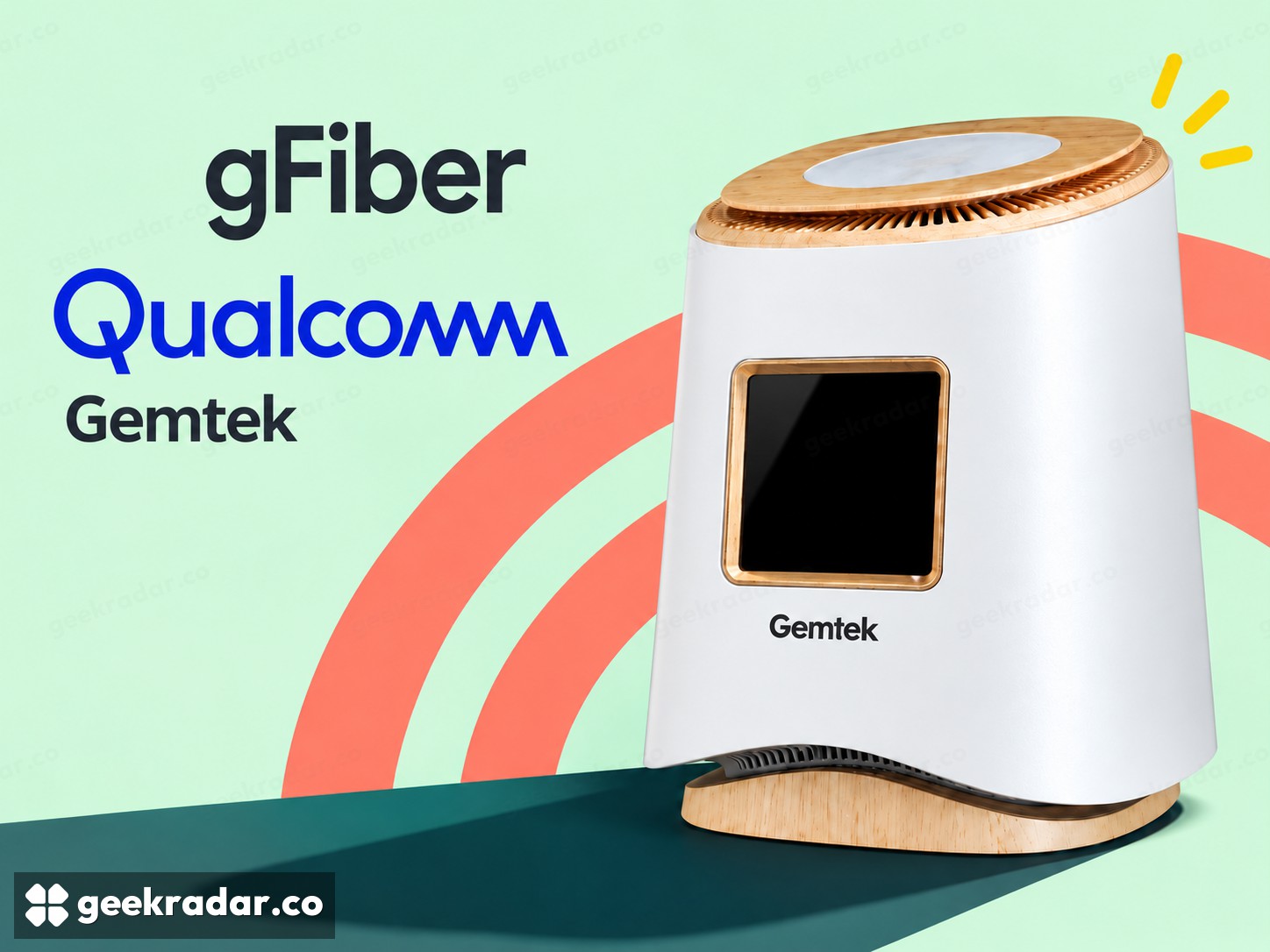
This is a closer look at the October 12 announcement from gFiber, Qualcomm and Gemtek, rather than a new retail launch. The partners demonstrated a gateway intended for gFiber’s symmetrical 20 Gig service. Existing customers on that tier are first in line after certification; the announcement does not establish an Italian broadband offer.
Three upgrades that should be judged separately
The optical connection, the wireless network and the software assistant solve different problems. A fast connection to the property does not guarantee the same rate at a laptop in another room. Wi-Fi performance still depends on the client, radio conditions and network layout. Likewise, an assistant can make a setting easier to change without making the wireless link faster.
Gemtek’s own announcement describes the division of work: Qualcomm supplies the platform, Gemtek integrates the device and Genix software, and gFiber shapes the subscriber experience. It targets commercial deployment in 2027. A demonstration, a deployment target and a certified shipping product are separate milestones.
The Italian relevance is technological rather than a reason to change ISP today. European operators and equipment buyers face the same distinction between fibre capacity, wireless reliability and manageable home networks. That makes the design worth examining without pretending that this particular service is available locally.
Reliability is a better question than another peak number
Wi-Fi 8 is being developed around IEEE 802.11bn. In its October 20 technical discussion, Cisco emphasizes coordination and reliability and places expected ratification around 2028. Its enterprise deployment outlook is separate from Gemtek’s consumer-gateway target. Neither calendar should be used to declare the other product already certified.
A useful way to think about reliability is a video call interrupted as you move between rooms. More theoretical bandwidth is not automatically the remedy if the problem is a transition between access points or contention for radio time. Those situations help explain the standard’s direction, but do not establish measured performance for this gateway. The product still has to demonstrate its implementation.
A spoken command needs an understandable result
The partners demonstrated natural-language parental controls and guest access, including a QR code presented on the gateway’s screen. The announced architecture uses local AI processing. That can reduce the need to send some requests elsewhere, but “local AI” is not a complete privacy policy or a guarantee that every service works without the cloud.
The difficult design question is authority. A request to pause a category of traffic should identify which devices are affected, how long the change lasts and how to undo it. A friendly sentence is not a sufficient confirmation when a mistaken interpretation could disconnect somebody else’s work. The same applies to guest access: ease of sharing should come with a clear account of what access was granted.
These are consequences of making the router an active interface, rather than claims about failures in a product we have not tested. The promise is appealing because network settings are often obscure. Its value will depend on whether the device makes those settings more intelligible, not merely more conversational. A better home gateway should leave the household knowing what changed after it says “done.”