Salesforce agrees to buy Braze: the $5.66 billion bet on what customers do next
The proposed acquisition targets real-time customer engagement. Its value lies in connecting an action to the next useful message.
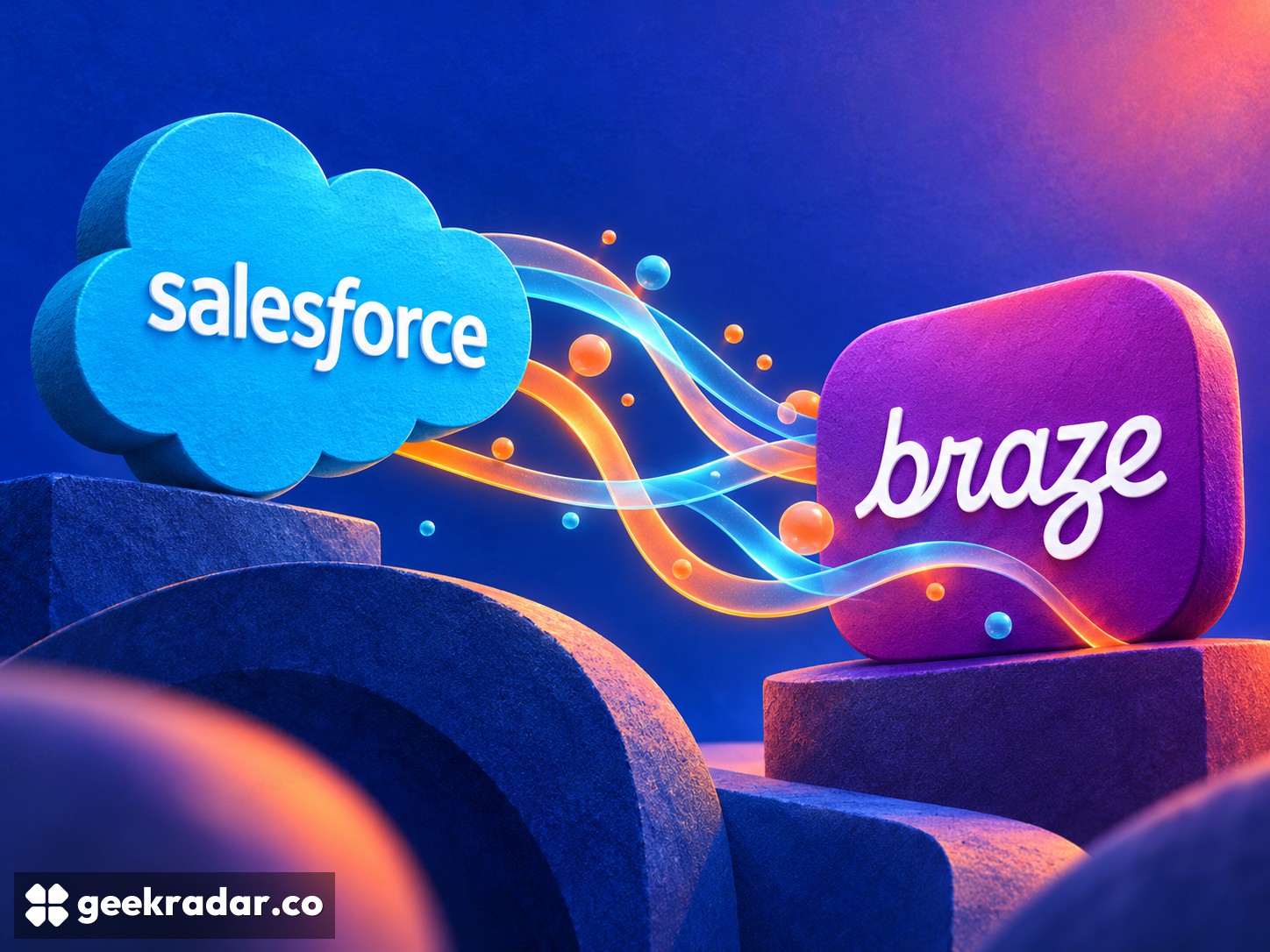
Salesforce has agreed to buy Braze for approximately $5.66 billion in enterprise value, a proposed deal that would bring the machinery behind many app notifications and personalized messages into its customer-management business. The important word is agreed: the companies have signed a definitive agreement, but the acquisition has not closed.
Under the terms announced on October 20, Braze Class A shareholders would receive $47.50 per share in cash. Salesforce expects completion in its fiscal 2028, subject to shareholder and regulatory approvals. That is a corporate fiscal-year designation, not a promise that the products will be combined on a particular calendar date.
The valuable part happens between the purchase and the notification
A customer database can tell a company who bought something. An engagement system helps decide what happens after the next action: an app opening, an unfinished purchase or a change in how someone uses a service. The difference is a sequence unfolding over time rather than a static customer record.
Braze's documentation on event properties makes that mechanism concrete. An event can carry additional information, such as a price or the time taken to complete a game level. Those properties can narrow a campaign's audience, personalize a message or help measure whether someone subsequently completed the desired action.
Consider a shopping app. A reminder about an abandoned basket becomes much less useful after the customer has purchased its contents. Connecting the purchase event to the messaging decision is therefore more consequential than generating a more persuasive sentence. Speed matters, but so does keeping the meaning of the event intact as it passes between systems.
This is why the proposed combination has a clearer rationale than simply adding another AI label. Salesforce says Braze would strengthen Marketing Cloud and complement its broader data and customer platforms. That is the intended integration, rather than a capability already delivered to customers through this transaction.
Personalization still depends on the plumbing
There are meaningful implementation details behind the promise. Braze distinguishes properties associated with the event that starts a customer journey from properties generated later in that journey. Its documentation also notes that certain event-property segmentation filters have a 30-day look-back window and that data becomes available for those filters after the relevant storage option is enabled.
For a business, these distinctions affect what a campaign can actually know. A marketing team may describe a desired audience in ordinary language, but its software needs a precise answer: which event, which property, which time period and which eligible customer? Buying a platform does not eliminate that modeling work.
The same distinction matters for consumers. A message that arrives at a relevant moment can be convenient. A system that mistakes an old action for a current intention can make personalization feel intrusive or simply wrong. More connected data gives a company more opportunities to act; it does not establish that every action is worthwhile.
What changes now
The announcement supplies a transaction price and a strategic direction. It does not establish a new combined price list, a mandatory customer migration or a finished technical roadmap. Existing Braze customers should distinguish commitments in their own contracts from the benefits the companies expect from a future combination.
For readers following the broader cloud-computing market, this is a deal about shortening the distance between information and action. Its practical test will be mundane and revealing: whether the company sending a notification knows that the customer has already done the thing it is asking them to do.