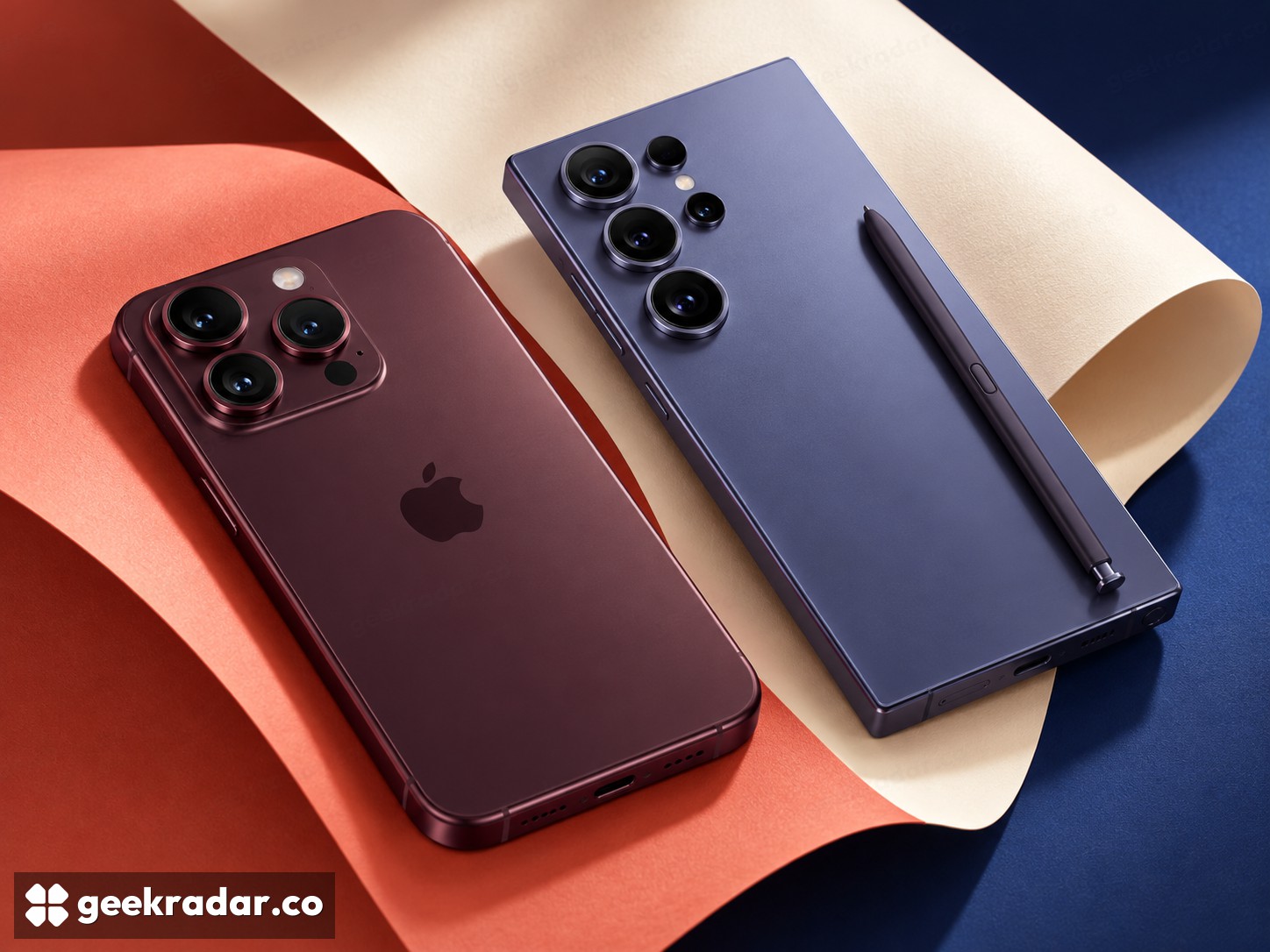
iPhone 18 Pro Max vs Galaxy S26 Ultra: cameras, privacy and the cost of switching
Apple’s video workflow and Samsung’s screen privacy solve different problems. Weight, storage and existing accessories can decide which flagship makes sense.
An iPhone 18 Pro Max and a Galaxy S26 Ultra can both fill a large pocket, shoot high-resolution photographs and cost more than a capable laptop. The useful comparison starts where their capabilities diverge: Apple's variable-aperture camera and video workflow, Samsung's screen privacy controls, and the practical cost of moving between iOS and Android.
These are the large flagship models, rather than a smaller iPhone priced against Samsung's largest handset. The comparison concerns documented features and buying decisions; camera specifications alone cannot establish which takes the better photograph.
Same screen size, different things to carry
Both manufacturers describe 6.9-inch displays. Apple's technical specifications put the Pro Max at 249 grams, while Samsung's Italian launch specifications list 214 grams for the Ultra. That 35-gram difference exists before either gains a case. It matters to a reader who holds a phone through a long train journey more directly than another peak-performance claim.
Samsung's Privacy Display controls can reduce side visibility for the screen or selected content. This is a concrete reason to consider the Galaxy for messages and work on public transport. It does not stop someone directly behind you reading the screen, nor does it replace account security. Think of it as control over viewing angles, with a useful everyday application.
Apple's smaller 6.3-inch Pro remains an alternative if the Max is uncomfortable. Choosing it changes this size comparison; there is no obligation to buy the biggest model to get the Pro camera system.
Read the camera labels carefully
The iPhone's 48-megapixel main camera has a variable aperture, with four documented settings from f/1.48 to f/4. Samsung's main camera is 200 megapixels with an f/1.4 aperture. Those numbers describe different things. Aperture controls light entering the lens and affects depth of field; pixel count describes image sampling. Neither is a complete score for photographs of children moving indoors.
The telephoto distinction is equally revealing. Apple specifies a 100mm-equivalent 4x camera and calls its 8x setting “optical-quality.” Samsung lists a 5x optical telephoto and a separate 3x module. The highest advertised zoom setting should not be read as another physical lens. If portraits are your priority, compare examples at the framing you actually use, including skin texture and motion, rather than choosing the biggest zoom numeral.
Apple also documents ProRes, Log and external recording options. These can make the iPhone attractive to someone whose editing process already uses those formats. They bring storage, transfer and editing decisions with them. A family recording short clips for messaging has little reason to pay extra for a workflow it will never use.
Compare the bill you will actually pay
Samsung's Italian launch price was €1,499 for 256GB. That is a dated reference, not a claim that October retailers still charge it. Compare a current local Galaxy offer with the same storage tier on Apple's Italian product page, including any required charger, insurance and financing charges. A trade-in price is only relevant if your particular phone qualifies.
Migration deserves its own line in that calculation. Check paid apps, saved authentication credentials, watch compatibility and the services shared with family members. An apparently cheaper handset can become an expensive change if it also replaces a watch or disrupts a work application. Equally, owning one Apple or Samsung accessory is not a lifetime obligation to keep buying the brand.
The sensible winner is the phone that removes a recurring inconvenience. For the commuter, that might be screen privacy and weight. For the editor, it might be capture formats. A camera number that changes no part of your routine is a weak reason to move an entire digital life.