Ubisoft’s Motherbrain wants game characters to remember what you did
The team behind Ubisoft’s voice-controlled Teammates experiment is now a subsidiary. Its next problem is what a character should remember after the player walks away.
In Ubisoft’s Teammates experiment, you could ask a squadmate to take cover. Motherbrain, the newly established Ubisoft subsidiary behind that experiment, has a harder assignment: building game characters that can remember. Following a spoken instruction takes a few seconds. Remembering who gave it, what happened next and whether it should change a later encounter is a different design problem altogether.
Ubisoft named two priorities for Motherbrain in its November 19 earnings release: non-player characters with memory and AI game masters that can manage large, interacting game worlds. The company wants its technology to serve studios within Ubisoft and eventually other creators as well. It hasn't announced a commercial game, a developer kit available to download or a date when players will encounter either feature. The corporate news arrived alongside job cuts at two Canadian studios. Ubisoft’s announcement establishes no link between those cuts and the new subsidiary.
What Teammates could already do
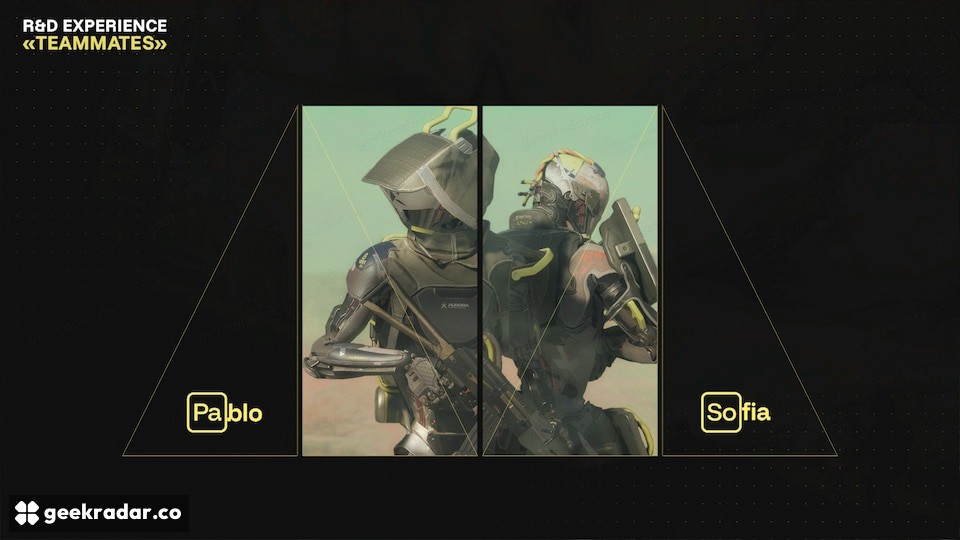
Teammates was a short first-person scenario shared with a few hundred players in a closed test. In the developers’ account of that test, Sofia and Pablo occupied the same space as the player. You could speak to either one and ask them to act. A third character, Jaspar, had a different job. It could point out an object, open a menu or pause the game. Asking a squadmate to move and asking Jaspar to change a setting both used speech, but they required access to entirely different parts of the game.
That distinction explains why the work attracted interest beyond a single prototype. A recognisable voice and a convincing reply mean little if the game cannot carry out the request. In its original technical description, Ubisoft said it built a software interface designed to connect the generative systems to its Anvil and Snowdrop engines. A team using that interface would still have to decide which actions its characters can actually take.
Which memories belong in a save?
Consider a player who promises to return an item, breaks the promise, then reloads a save from before the conversation. A character who remembers the betrayal across that reload might seem unusually perceptive. To the player, it could just as easily look like a broken quest. This is a hypothetical example, but it illustrates a decision no amount of extra dialogue settles: does a memory belong to the character, the save file or the person holding the controller?
In Ubisoft’s earlier character research, writers defined backstories and motivations, then revised the boundaries when improvised dialogue sounded wrong for the character. Persistent memory extends that work into the next encounter. A shopkeeper who remembers a kindness could make a familiar street feel different on a return visit. A shopkeeper who remembers something that never happened in this save would make the very same street harder to believe.