Trump threatens a tax on overseas data centres. What happens to sites already being built?
In Espoo, Finland, Microsoft’s data-centre project is tied to the city’s heating plans. The US president gave no rate or cutoff for overseas projects already under construction.
Donald Trump said on Friday that American companies building AI data centres overseas would face a “tremendous tax.” At the same White House briefing, he urged US communities to bargain with developers for a share of the benefits of hosting their facilities. The first idea raises a practical question for the second. In the Finnish city of Espoo, one of the benefits negotiated with a developer is heat for people’s homes. A server hall built on the other side of the Atlantic cannot deliver it.
The president gave no rate, start date or explanation of how the tax would work. He said he had yet to discuss the plan with his officials, according to the Associated Press account of the briefing. A company deciding where to build has a new political risk to weigh. It still has no figure to put in the tax column of a project budget.
What counts as building abroad?
The word build is doing a lot of work. A company choosing between two empty plots faces a different decision from one that has already hired a contractor and broken ground. A cloud provider can also rent capacity in a building another company owns. Would the proposed charge fall on the American tenant, the developer, or only a company that owns its building? The remarks leave all three cases open. Axios reported that Trump did not specify whether he would ask Congress to act or rely on existing executive powers.
For customers, a server's location can be part of what they buy. A nearby site shortens the journey a request and its reply have to make. A customer that has agreed to keep certain records in a particular jurisdiction has a different constraint again. Moving the machines to the United States might preserve the raw computing capacity while changing the service the provider can promise.
A city has already planned around the heat
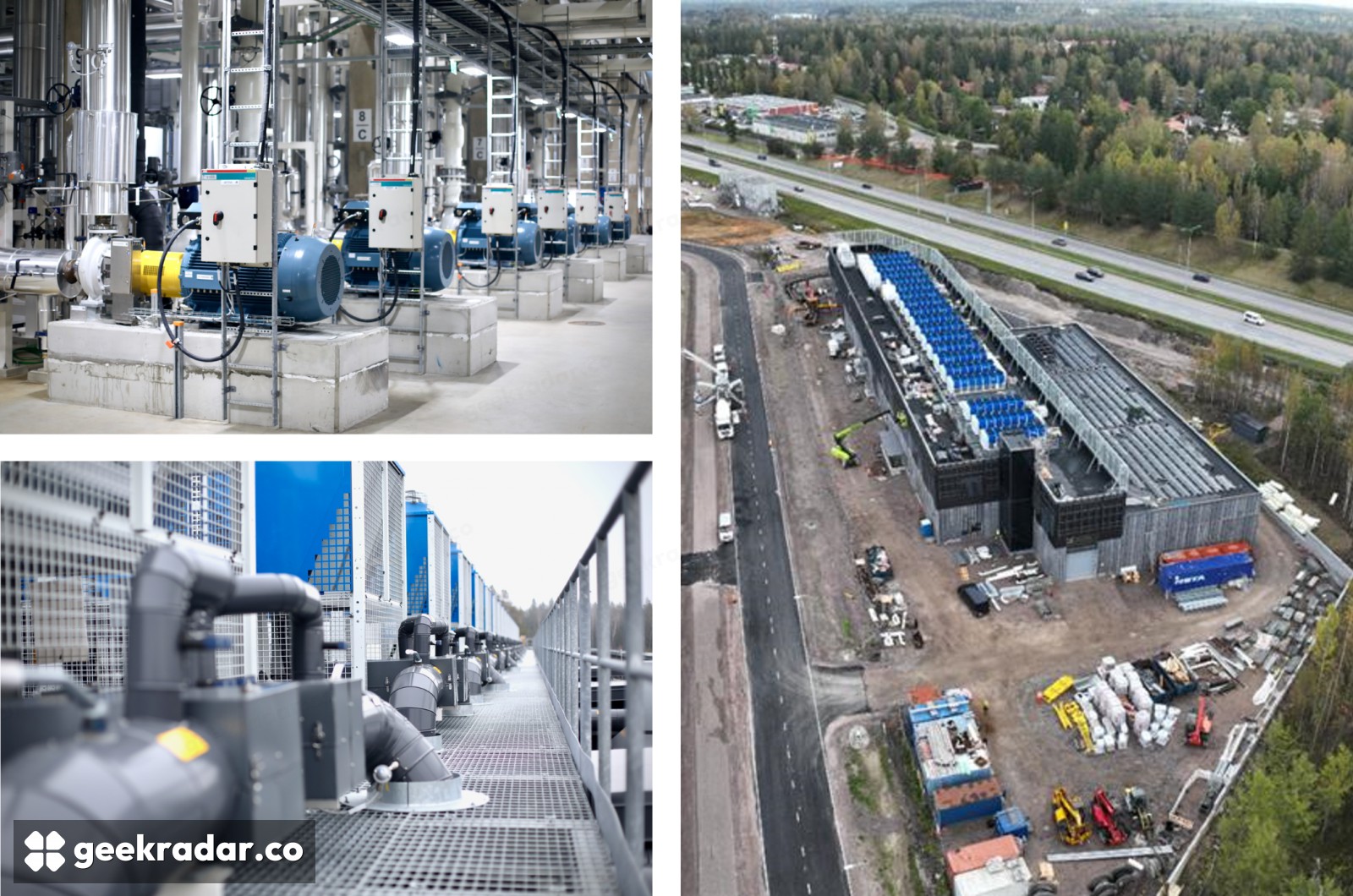
Microsoft’s construction updates for Hepokorpi go back to the earthworks scheduled for September 2024. In Espoo the servers are only one part of the project. Energy company Fortum is responsible for recovering excess heat and supplying it to the district heating network. Water circulating through that network carries heat to buildings that would otherwise need another source.
About three quarters of Espoo’s residents live in homes connected to district heating. The city’s June project report puts the potential contribution of recovered data-centre heat at around 40% of district heating demand once the recovery system is fully operational. That is a projection for a completed system. It would be a mistake to read it as the share of homes that Microsoft heats today. It would also be a mistake to read Friday’s remarks as a decision about this Finnish project.
The distinction matters even for two sites with identical computing power. Both need an electricity connection, a constraint explored in GeekRadar’s report on the IEA’s satellite survey. Only the site beside Espoo’s heat network can supply that network. If Washington puts its proposal into writing, the provision worth finding first is the one that says what happens when a city has already laid its plans and a contractor has already started digging.