SteamVR 2.19’s beta sharpens more than the render-resolution setting
Valve changes automatic scaling, filtering and system-layer handling, with comparison images that help separate detail from a higher pixel count.
Valve’s SteamVR 2.19.1 beta changes how streamed VR is rendered and filtered, with particular attention to details that become soft or discolored before reaching the headset. The November 2 beta notes include direct comparison images and an option to switch between the new and legacy stream quality. That makes this an unusually inspectable update: the relevant question is how the same material looks through each path.
The changes concern the streaming pipeline, not a new display panel. They can alter the image delivered to existing hardware without changing its physical pixel count. They also remain beta changes, so an owner on the stable branch should not assume that seeing a news report means these settings have already changed on their installation.
Defaults change, manual choices stay put
Valve sets the default renderer scale to 1.5, targeting approximately 1.4 times panel resolution, and removes the GPU performance test previously used to select a resolution. Those are default-policy changes, rather than a guarantee that every game will maintain its previous frame rate at the new workload.
Existing manual rendering and encoded-video resolution selections are preserved. To adopt the new defaults, users who previously set those values manually must return them to Auto. That distinction explains why two people installing the same beta might initially see different results: an update need not erase an intentional old setting.
Steam Frame receives a separate encoded-video-size increase, from 1152 to 1216. Valve identifies that adjustment specifically with Steam Frame; it should not be generalized to every headset using SteamVR. The wider software changes and this hardware-specific setting belong to different scopes.
Filtering can lose detail before the display sees it
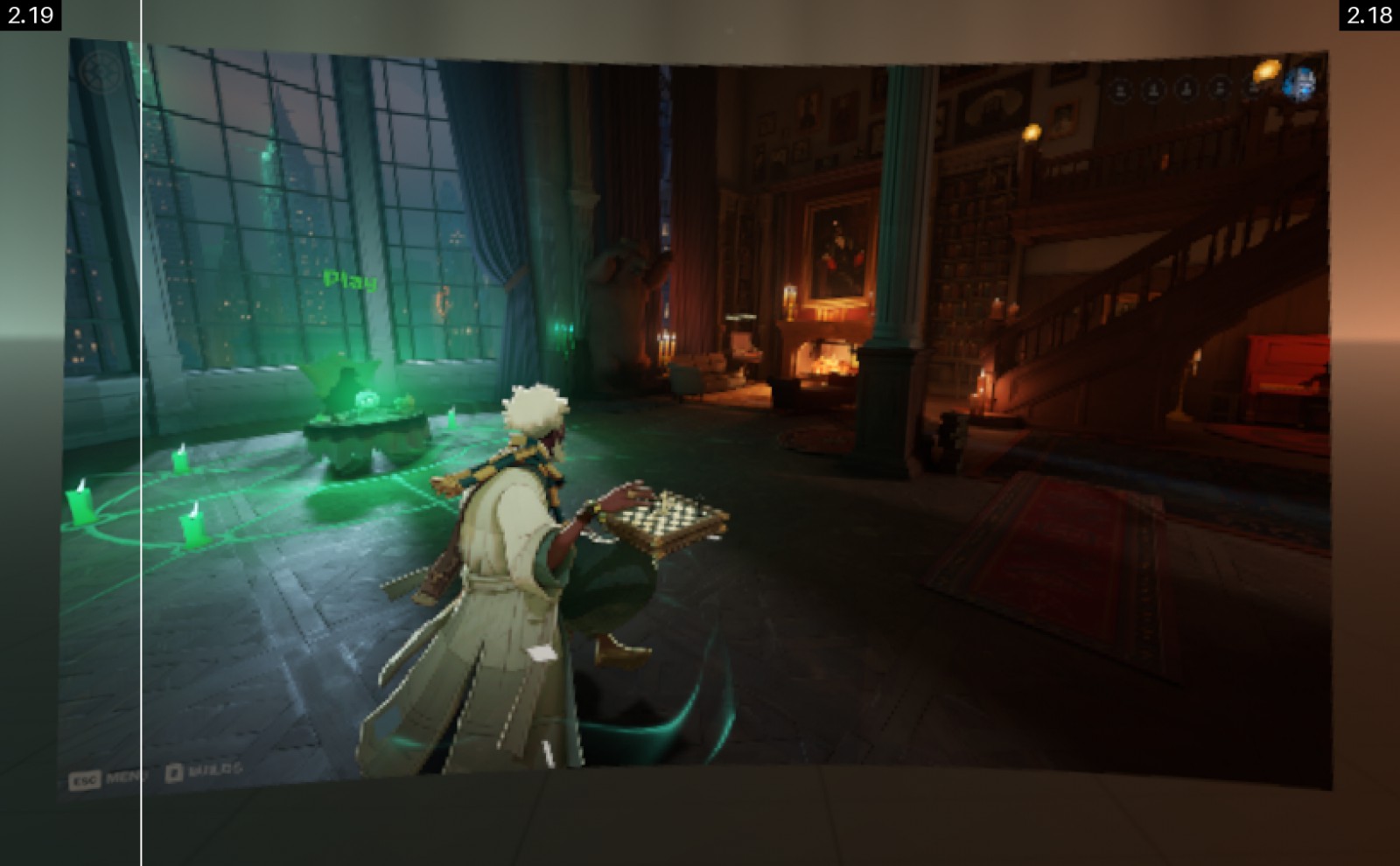
The beta introduces higher-quality color filtering and changes intended to improve brightness around saturated edges. Peripheral downscaling is also revised. In a streamed system, the final picture depends on several transformations between the application’s rendered image and the display. Improving one of those transformations can preserve an edge that simply increasing a nominal resolution would not address in the same way.
Valve’s supplied comparisons place 2.19 on the left and 2.18 on the right. They are examples selected by the developer, not measurements from our own headset. Their value is showing the particular visual differences the release is targeting, rather than proving an equal improvement in every scene.

System layers get their own treatment
For both foveated and non-foveated streaming, system layers are now rendered from source textures without an intermediate resampling step. Valve names interfaces, third-party overlays and desktop theater among the affected material. Text and interface edges can make such processing differences particularly visible because they contain sharp, repeated transitions.
This is distinct from a game rendering more complex geometry or from the headset’s eye tracking making a game compatible. The beta also refreshes consent for PC applications using eye data, a separate permission change that should not be confused with the image-quality settings.
Our Steam Frame survey report explained the headset’s growing representation among Steam-connected VR users. This update asks a more immediate question for those users: what image does that connection deliver? A preserved manual setting, a beta branch and a legacy comparison switch are less exciting than a new headset announcement, but they give owners a concrete way to judge whether their existing view has improved.