Spotify lets artists remove releases wrongly credited to them
Artist Profile Protection is open to all artist teams. A mistaken credit can be removed up to 28 days after release, while requiring approval in advance carries a different risk for collaborators.
Two musicians can share a stage name without sharing a single song. If a distributor sends a recording to the wrong Spotify profile, listeners might see an unfamiliar single alongside years of the right artist’s work. On November 17, Spotify opened Artist Profile Protection to all artists, giving their teams a chance to catch a mistaken credit before release and a way to remove it afterward.
The change matters even when neither musician has done anything wrong. A shared name or an error in the release metadata can produce the same result as someone deliberately claiming a connection. As TechCrunch reports, impersonation has added urgency to an older distribution problem. The question the new tool puts to an artist is one they can answer for either kind of recording: does their name belong on it?
What happens if nobody answers the email?
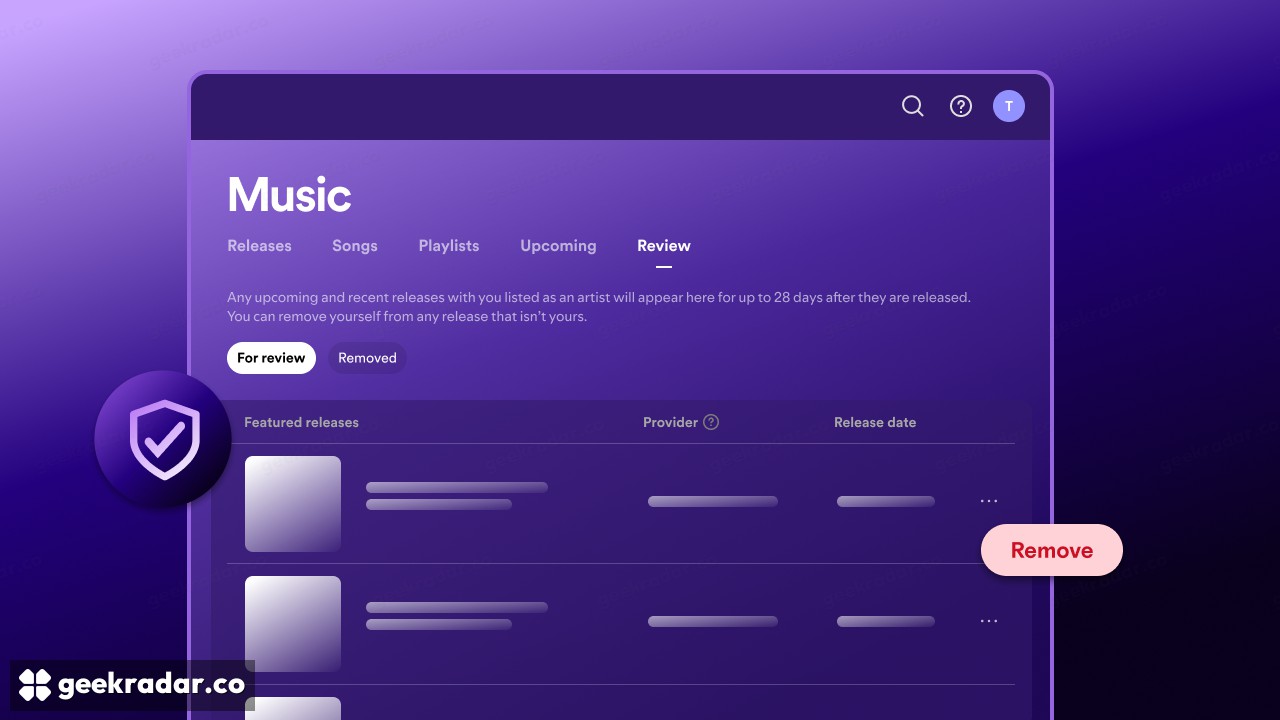
An artist-team administrator or editor can enable the feature in Spotify for Artists. With the default Review releases setting, a delivery bearing the artist’s name triggers an email. The team can inspect eligible releases under Music → Review and remove the association. Doing nothing lets the release appear as scheduled. According to Spotify’s support guide, the team can still act for up to 28 days after release.
Removing a mistaken credit has consequences beyond tidying up the artist page. The release no longer contributes to that artist’s statistics or feeds recommendations to their listeners. It can still appear under the same name on another service. An artist facing that problem has a reason to contact the distributor even after fixing the Spotify listing.
What changes when approval is required?
Spotify also describes an advanced option called Block releases. Its support page says availability is limited, so an artist who has the new review tools might not see this switch. Where enabled, it changes what silence means. If the main artist’s approval is required, a missed request can hold up the release for everyone credited on it. If a featured artist or remixer doesn’t approve, the release can still go live without their credit.
That difference is worth settling before a Friday single is due. Consider a guest vocalist who hasn’t heard of the company delivering a collaboration. Spotify points out that the provider name on screen can differ from the distributor’s familiar trading name. Checking with the distributor can save a genuine credit, and approvals can take up to 24 hours to process.
For an artist who occasionally gets a namesake’s single, an alert offers a chance to intervene without making every release wait. For a team repeatedly clearing strangers’ tracks from its catalogue, an approval requirement may be worth the extra work. The practical question is who will be watching the inbox the day the artist’s own record arrives.