How Obsession sold a $6.99 wish through a real online store
The carton promised one wish per lifetime. The shop let customers buy three. Behind the fictional manufacturer was a designer who had to ship every order.
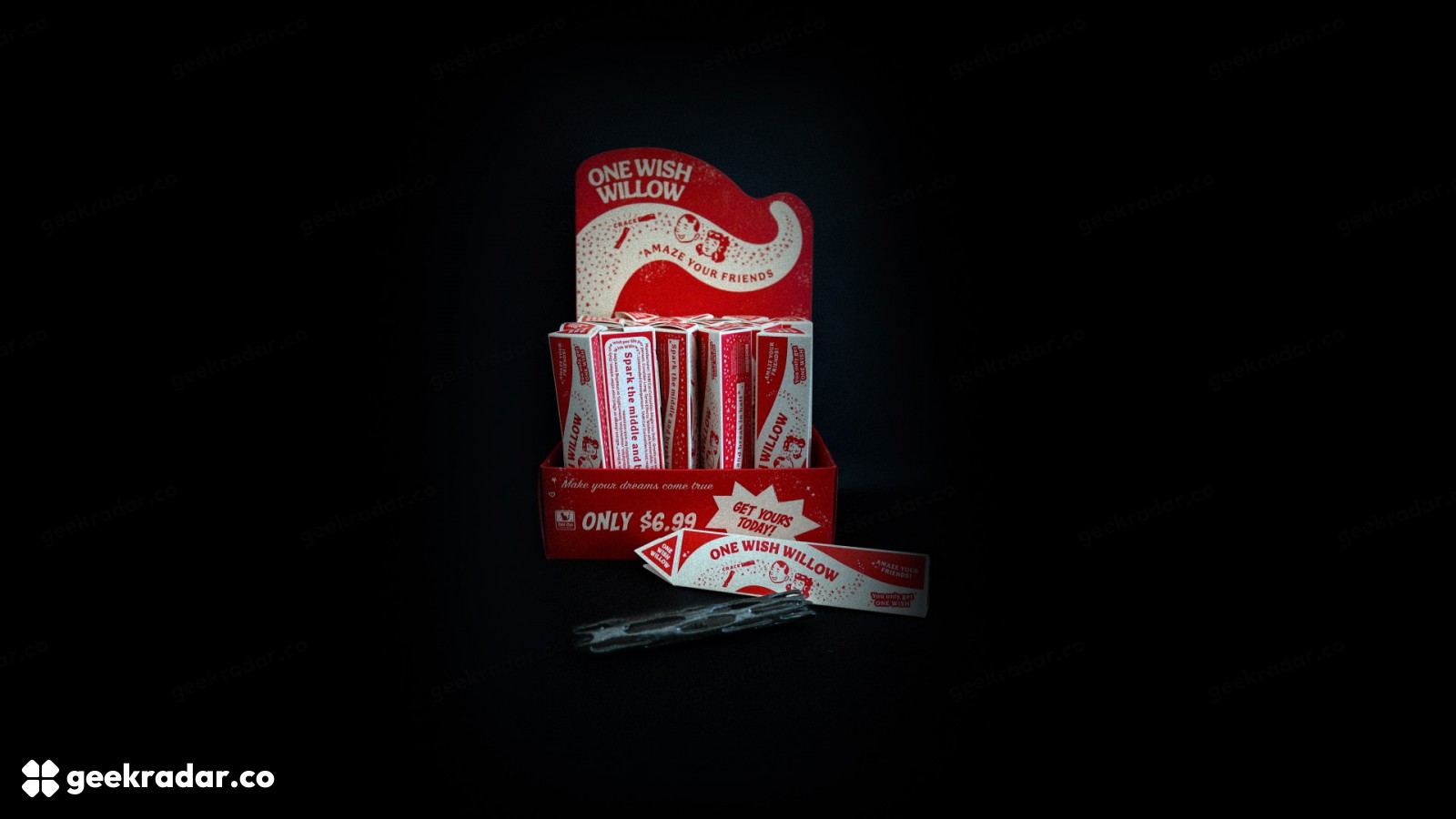
The red-and-cream carton in Curry Barker’s Obsession looks like something you might find beside a cash register. For a few hours before the film’s theatrical release, you could actually put one in a shopping cart. The One Wish Willow cost $6.99, came with a certificate of authenticity and had a limit of three per customer. Today the original storefront still invites you to make a wish. The buy button says sold out.
With *Obsession* now streaming on Netflix in the US, the carton repays a closer look. Viewers only need the premise. Bear (Michael Johnston) wants his friend Nikki (Inde Navarrette) to love him, and a novelty item promises him one wish. How he gets his hands on it mattered enough to Barker that he discarded several more familiar ways to start the story.

Why a wish needed a price tag
In an interview with Focus Features, Barker says he considered wishing wells and shooting stars. He also wanted to avoid having the object turn up mysteriously at someone’s door. A shop solves a small but crucial problem for him. A shooting star can catch someone by surprise. Walking to the till with a box in your hand takes a decision, however little money changes hands.
The package does some of the writing. A counter display can hold a whole row of identical willows. It suggests that other people have bought them, that a supplier exists and that someone once had to decide what to print on the box. That gives an otherwise impossible object a rather ordinary history. You can see why Focus Features chose to reproduce this particular piece of the film. It already knew how to introduce itself to a stranger.
One wish per lifetime, three willows per customer
Joey Barrus, who led design on the campaign, describes building a functioning Shopify store and fulfilment channel. The site speaks in the voice of the fictional manufacturer, TABI Cat Curiosities. It has an infomercial, testimonials and a help line. Scroll far enough and the FAQ addresses a dissatisfied customer’s obvious question. If a wish is misunderstood, the manufacturer disclaims responsibility. Elsewhere it allows only one wish per lifetime. At checkout, of course, a customer could buy three.
That little discrepancy is funnier than a paragraph of invented corporate history. The FAQ is written for someone who believes the stick works. The order limit is for a customer who might reasonably want a spare, a gift or something to leave unopened. Both people can use the same page, and only one needs a parcel delivered.
Barrus says the first sale moved more than 600 willows in three hours. In Project C’s account of the campaign, the agency puts the total across two releases at roughly 5,000, with each allocation selling out within twelve hours. Those figures describe the agency’s own sales campaign. They tell us how many props found buyers; they offer no way to count how many of those buyers later bought a cinema ticket.
The film also reached players through Nikki’s appearance in Fortnite. Getting the willow into someone’s hands took a different kind of work. Someone had to take a payment, pack a cardboard box and send it off. The certificate inside could vouch for who sent the stick. For anything that happened after you broke it, the manufacturer referred you to the FAQ.