A quarter of the backgrounds in Lilo & Scratch came from the original Lilo & Stitch
Disney brought watercolor paintings out of its archive for the short playing before Hexed. The harder job was getting a pencil drawing and a computer-animated cat to touch.
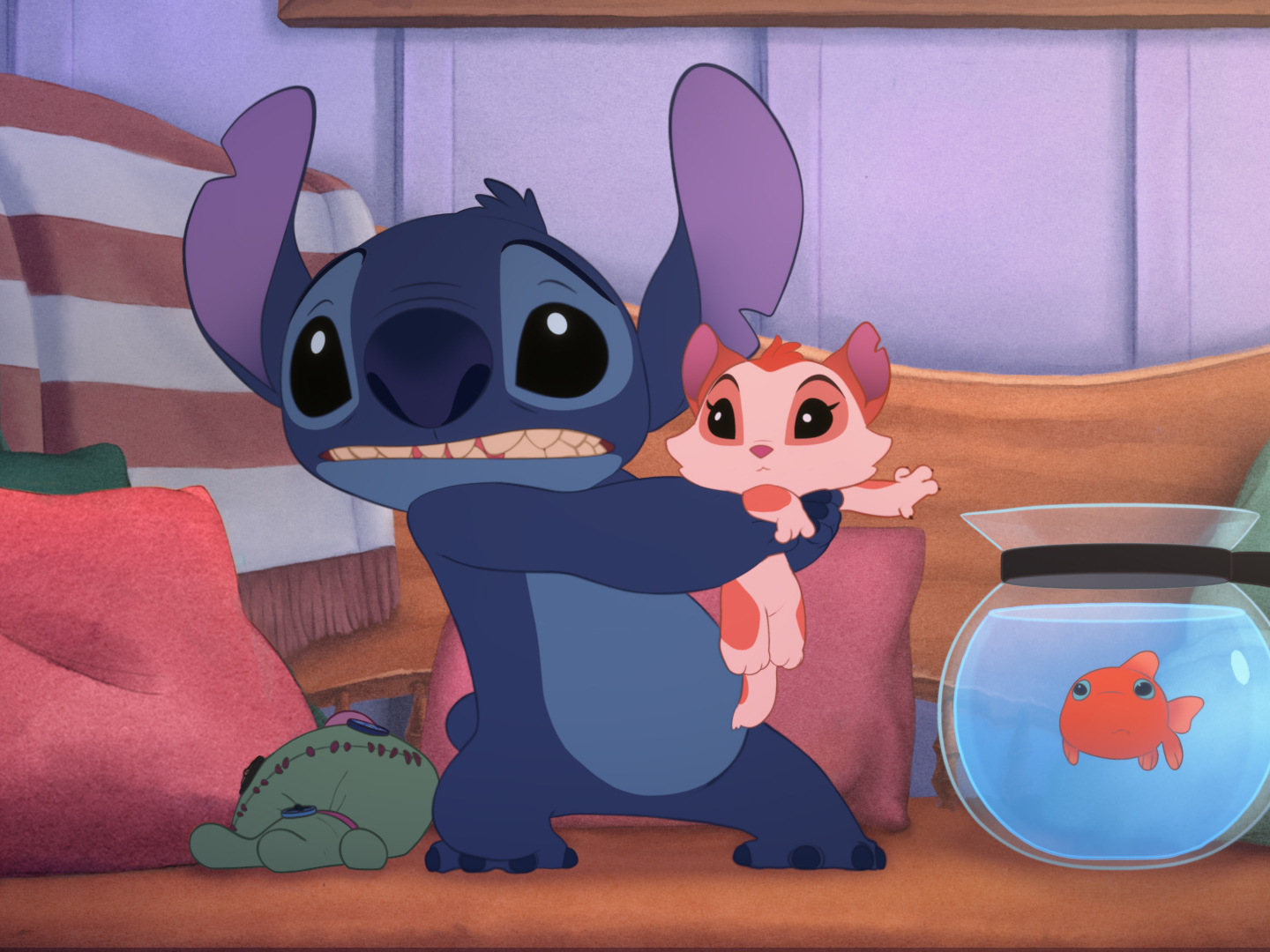
One of the things Disney kept from Lilo & Stitch was the scenery. About a quarter of the backgrounds in Lilo & Scratch, the six-minute short playing before *Hexed* in US theaters from November 25, were painted for the 2002 film. Stitch and the cat Lilo brings home can step straight into a world that already exists on paper. Getting the two of them to share a shot took rather more invention.
The distinction is easy to miss in a finished frame. A watercolor can give a room its light, its depth and most of its color. It cannot decide where a moving character puts a paw. Directors Fawn Veerasunthorn and Malcon Pierce had to answer both questions, and the people best placed to answer them worked with different tools.
The old paintings set the terms for the new ones
Production designer Kevin Yang’s team went to the Disney Animation Research Library to see the backgrounds in person. According to the studio’s account, artists including Tia Kratter and Larry Wu supplied more than a dozen new background paintings. Some artists worked in watercolor on paper. Others painted digitally in Photoshop to sit alongside those washes.
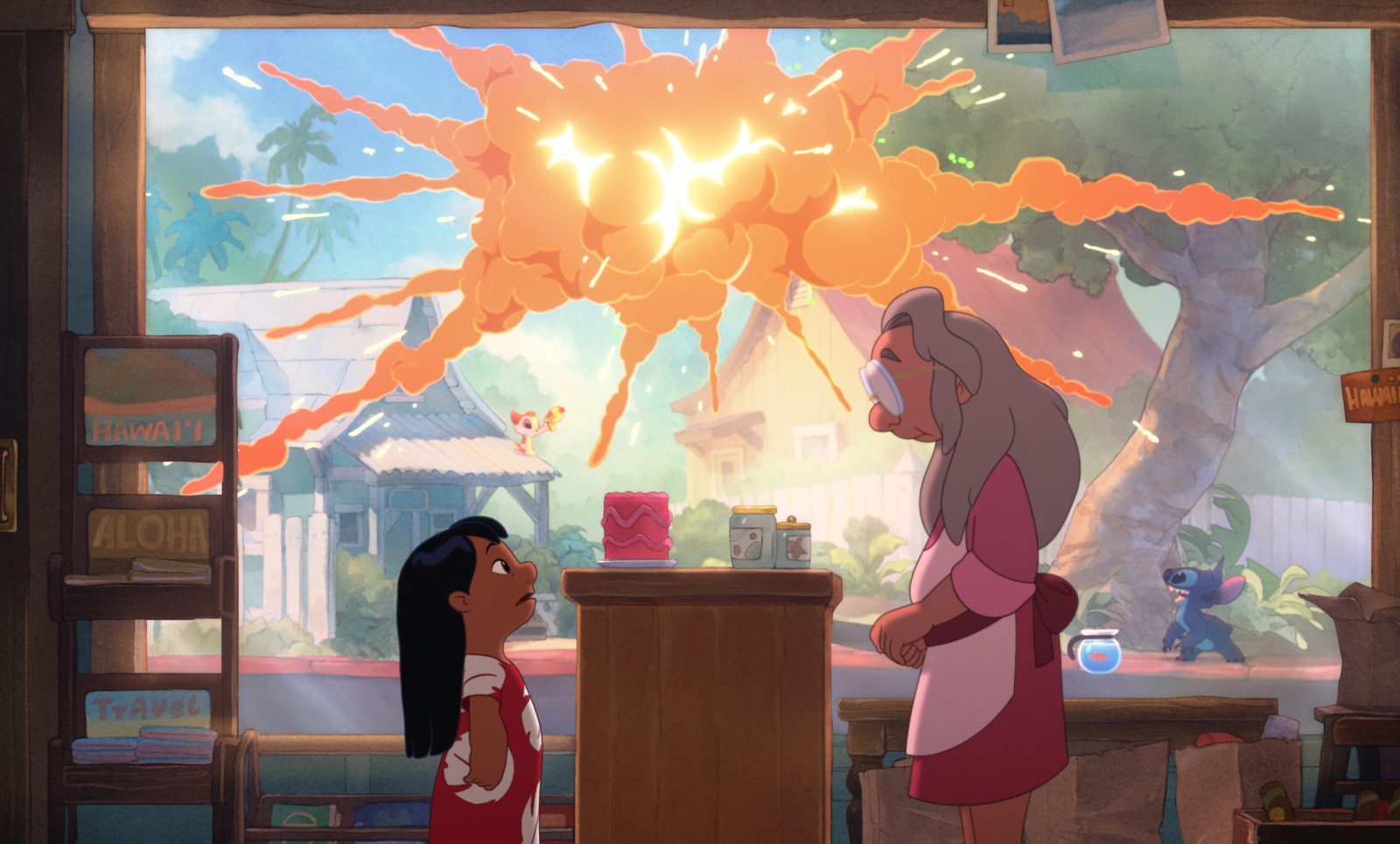
Look at the shop interior below. The display cases tell you where the floor and walls meet. Beyond the window, the foliage breaks into loose patches of orange and green. You can read the room at a glance without having to count the leaves. That division of attention is a more useful guide to matching the old paintings than a list of colors. A meticulously sharp new tree could look out of place even if every leaf were the right orange.
The framing matters too. Visual effects supervisor Jeremy Sikorski told a press-day audience that the short preserves the original film’s 1.66:1 aspect ratio. On the same screen, Hexed opens wider. The change happens between films, giving the short the shape of its own predecessor as well as some of its scenery.
What happens where two characters touch
Disney gives a revealing example from a shot involving a truck driver. The driver was drawn by hand. Scratch was animated in CG, as was the truck, and the team planned the layout in three dimensions. When one character takes hold of the other, the contact has to land at the same spot and on the same beat. If the drawing anticipates the grip by even a little, the driver appears to react to thin air. The truck gives both artists a common space in which to solve that problem.
It helped that Alex Kupershmidt, who supervised Stitch’s animation in 2002, returned as character animation lead. In the directors’ account, one of his first questions concerned whether he could draw on paper. He could. The technical team took responsibility for getting that work into the shot, which left the animator free to concentrate on the weight and timing of a pose.
There are two very different uses of drawing on the same cinema ticket. The opening of *Hexed* builds toward a shadow-theater effect. Lilo & Scratch sets a quieter challenge. After all the work of matching pencils, pixels and paint, the thing that should catch your eye is what the cat has its paws on.