Kioxia put 1.1 petabytes of SSDs behind an NVIDIA rack. What fits in that space?
The GB200 NVL72 still has 13.4 TB of high-bandwidth GPU memory. Kioxia’s experiment shows why a 512-byte read matters when a vector database outgrows it.
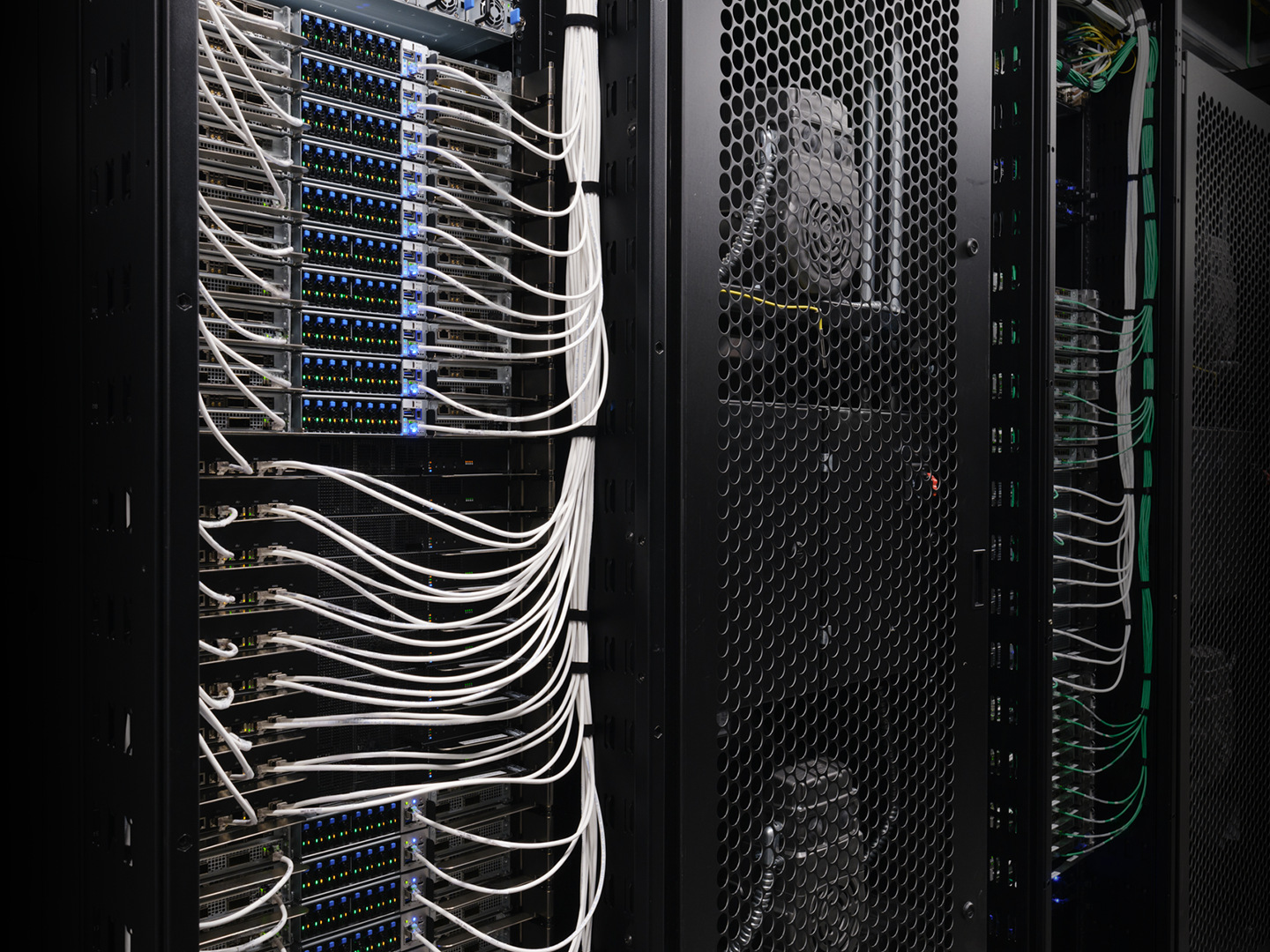
One NVIDIA server rack, 144 solid-state drives and a database that could hold two trillion vectors. The most revealing number in Kioxia’s November 27 European announcement is the smallest one. Its experiment lets the system access the flash in units of 512 bytes. For a GPU looking for one particular vector in a collection far too large for its own memory, the size of each trip matters as much as the size of the warehouse.
Kioxia and NVIDIA built the proof of concept around the GB200 NVL72, a liquid-cooled rack with 72 Blackwell GPUs. NVIDIA specifies 13.4 TB of high-bandwidth memory (HBM3E) across those GPUs. That specification survives the experiment intact. The extra capacity comes from flash, reached through an NVIDIA software library called Scaled Accelerated Data Access, or SCADA.
Where the petabyte comes from
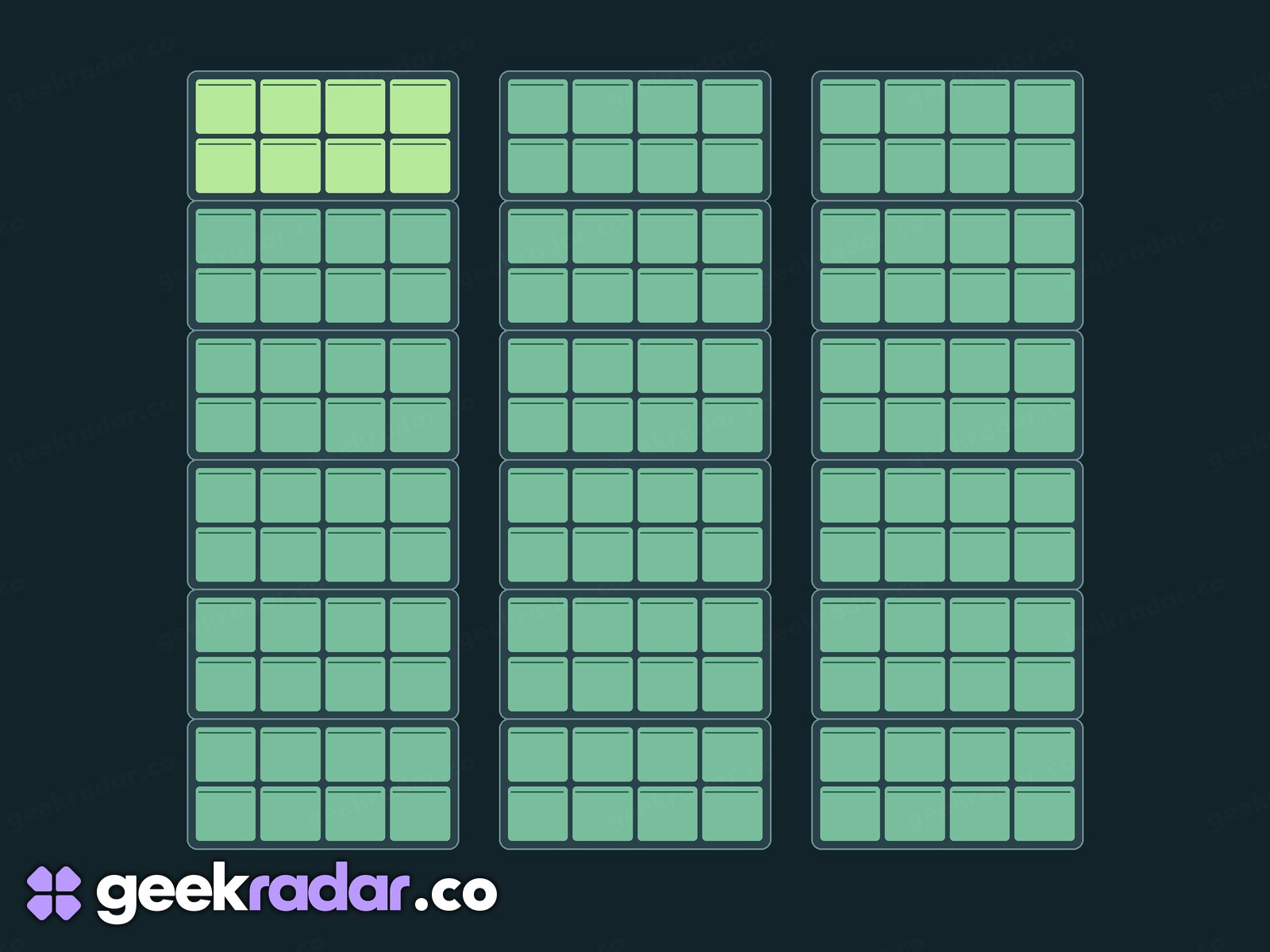
Kioxia fitted eight XD8 E1.S drives to each of 18 server nodes. At 7.68 TB per drive, that works out to 61.44 TB per node and 1,105.92 TB across the rack. Those are decimal, raw capacities. Formatting the drives and organizing the database both consume space.
A vector is an ordered set of numbers. A search service might use one to describe an image and another to describe a query, then look for vectors close to the query. Packing the values into a rack solves one physical problem. Finding a close match quickly in a crowded index poses another.
Why read just 512 bytes?
Imagine a search that has already narrowed its next step to one candidate. If that candidate occupies 512 bytes, fetching a 4 KiB block brings back eight times as much data as the candidate itself. The extra bytes can pay their way if the search soon wants neighboring records. If the next useful candidate is somewhere else entirely, they have taken up transfer capacity for little return. This example illustrates why fine-grained access is interesting. It does not predict an eightfold speedup.
The missing measurement is the time from a query arriving to its results coming back under load. Kioxia’s description of the test gives the drive count, access size and potential vector count. It supplies no query latency, searches per second or comparison with a conventional storage path. Even a busy rack posting an impressive total read rate could leave an individual query waiting for a chain of dependent reads.
That leaves a more useful way to read the headline figure. A service whose searchable collection outgrows HBM might keep far more candidates within reach of the same GPUs. Whether a person notices that larger collection or just a longer pause before the first result depends on how often the search has to reach for flash.