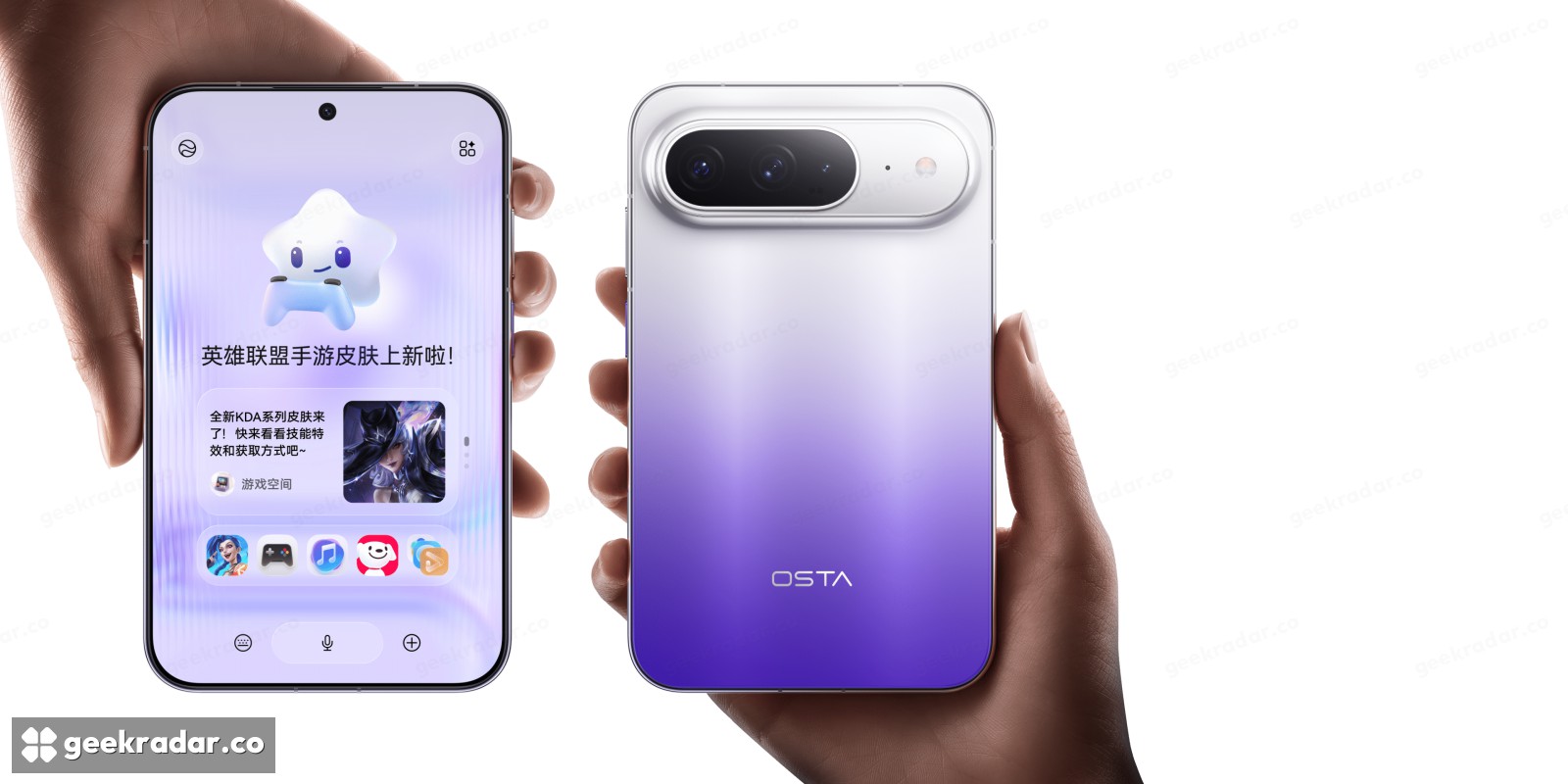
Huawei’s first OSTA phone is just 6.39 inches across the diagonal. It’s 87 mm wide.
The O1 Pro puts a wide OLED panel in a rigid handset. A page of text and a widescreen film show why its proportions matter more than the diagonal suggests.
A 6.39-inch phone sounds easy enough to wrap a hand around. Before buying Huawei’s OSTA O1 Pro on that assumption, try spreading your thumb and fingers 87 millimetres apart. That is the width of the handset Huawei launched in China on November 20. It stands only 144.1 mm tall. The screen is one rigid piece, and you get its full width without unfolding anything.
The O1 Pro is the first phone from Huawei’s new OSTA brand. The Chinese launch offer starts at 5,499 yuan for 12 GB of RAM and 256 GB of storage. The 5,699 yuan shown on Huawei’s product page is the starting list price. IT Home’s reporting from the launch lists the two prices side by side. Buyers at the other end of the range pay 8,799 yuan at launch for 16 GB and 1 TB.

What fits across the page
Huawei gives the OLED screen an aspect ratio of approximately 16:9.5. The specification sheet lists 2,232 by 1,320 pixels and refresh rates up to 120 Hz. The unusual number here is the ratio. In portrait orientation, it gives an illustrated page more room from left to right, as Huawei’s reading example shows. How much text fits on a line still depends on the app, its margins and the reader’s chosen type size.
Turn it sideways to watch a conventional 16:9 video. With the whole picture visible, the OSTA panel is slightly taller than the video needs, leaving thin strips above and below. A 20:9 screen leaves empty space at either end instead. A wider cinema release will fit differently again. For someone who reads comics upright and watches 16:9 clips sideways, both uses make sense of the same design decision. The extra distance your thumb has to travel is there in every app.
What Huawei puts on the extra space
On the Chinese handset, Huawei gives its Xiaoyi assistant a home-screen presence and a character called Xiao Xingmang. One example in the product presentation is a return route appearing as a concert ends. That requires more than space for a card: the system has to recognise the event, know where the user is going and get the timing right. Huawei illustrates that scenario; it does not supply a success rate for those suggestions.
At about 200 grams, the O1 Pro also carries a 7,000 mAh typical battery and a rear camera bar with a 200-megapixel main camera and a separate 50-megapixel telephoto. For a reminder of how differently two phones can put a 200-megapixel label to work, see the optics behind OPPO’s Reno17 Pro. The easiest OSTA feature to judge before taking a picture is still its width. It buys room for a drawing and its captions on the same page, then asks the same hand to reach the back button.