GTA VI’s race circuits and muddy trails give driving more than one rhythm
Official footage and screenshots contrast competition, off-road riding and dense city streets, without revealing every event’s rules.
In this guide
GTA VI’s driving footage is interesting for more than the speed of its cars. The August Extended Look places vehicles on different kinds of ground, while official screenshots contrast muddy off-road riding with busy urban streets. Those environments ask different things of a driver, even before anyone can measure the handling model in the released game.
Rockstar identifies the Extended Look as in-game footage captured on PS5. Game Informer’s August 27 breakdown identifies a closed-course racing sequence and an off-road competition among the activities shown. The feature also cautions that not every activity glimpsed in the presentation has a fully established playable format. That is a useful boundary for reading the images.
A route gives speed its meaning
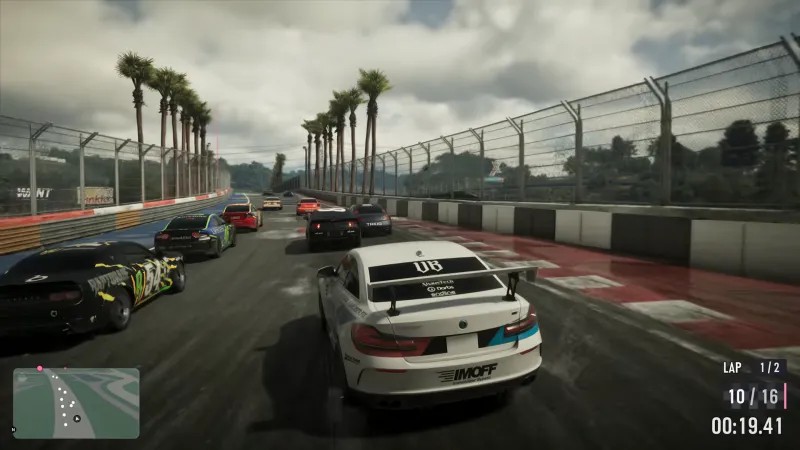
On a defined race course, a corner has a particular role: it is an obstacle on the route to a finish. In free exploration, that same bend can be an entrance, a shortcut or a reason to stop. The road may look similar while the player’s objective changes the information that matters.
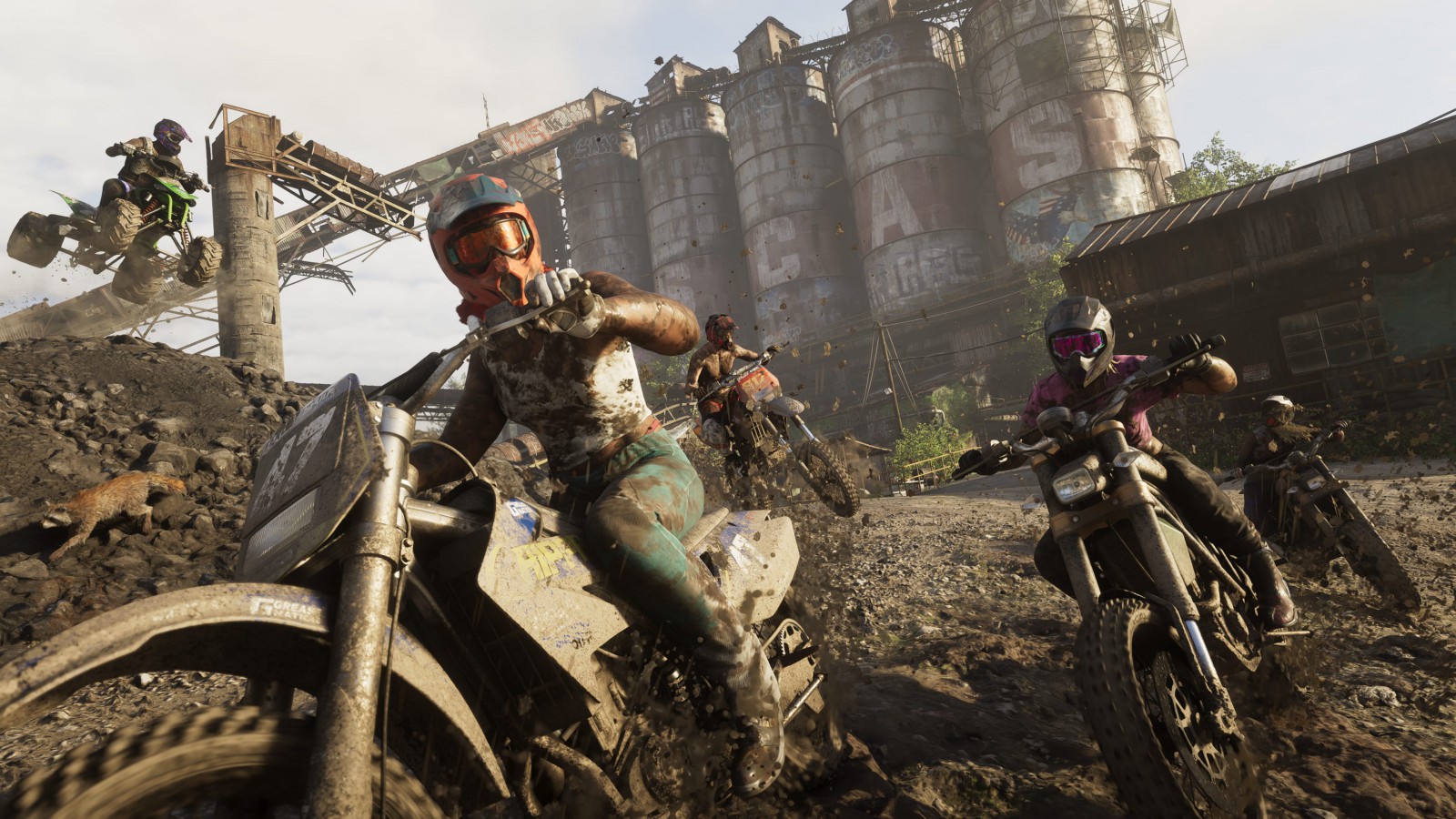
The circuit-racing image makes the course itself part of the attraction. The off-road screenshots add a different visual vocabulary: uneven ground, mud, motorcycles and an ATV sharing a scene. These are observations of the material shown, not claims about a complete championship structure, vehicle classes or a particular tire simulation.
A game does not need to become a dedicated racing simulator for terrain to matter. Variation can come from the width of a route, the visibility of its next turn and the obstacles around it. What remains unknown is how far those visible differences translate into the final controls, traction and vehicle behavior.
The city introduces a different kind of density
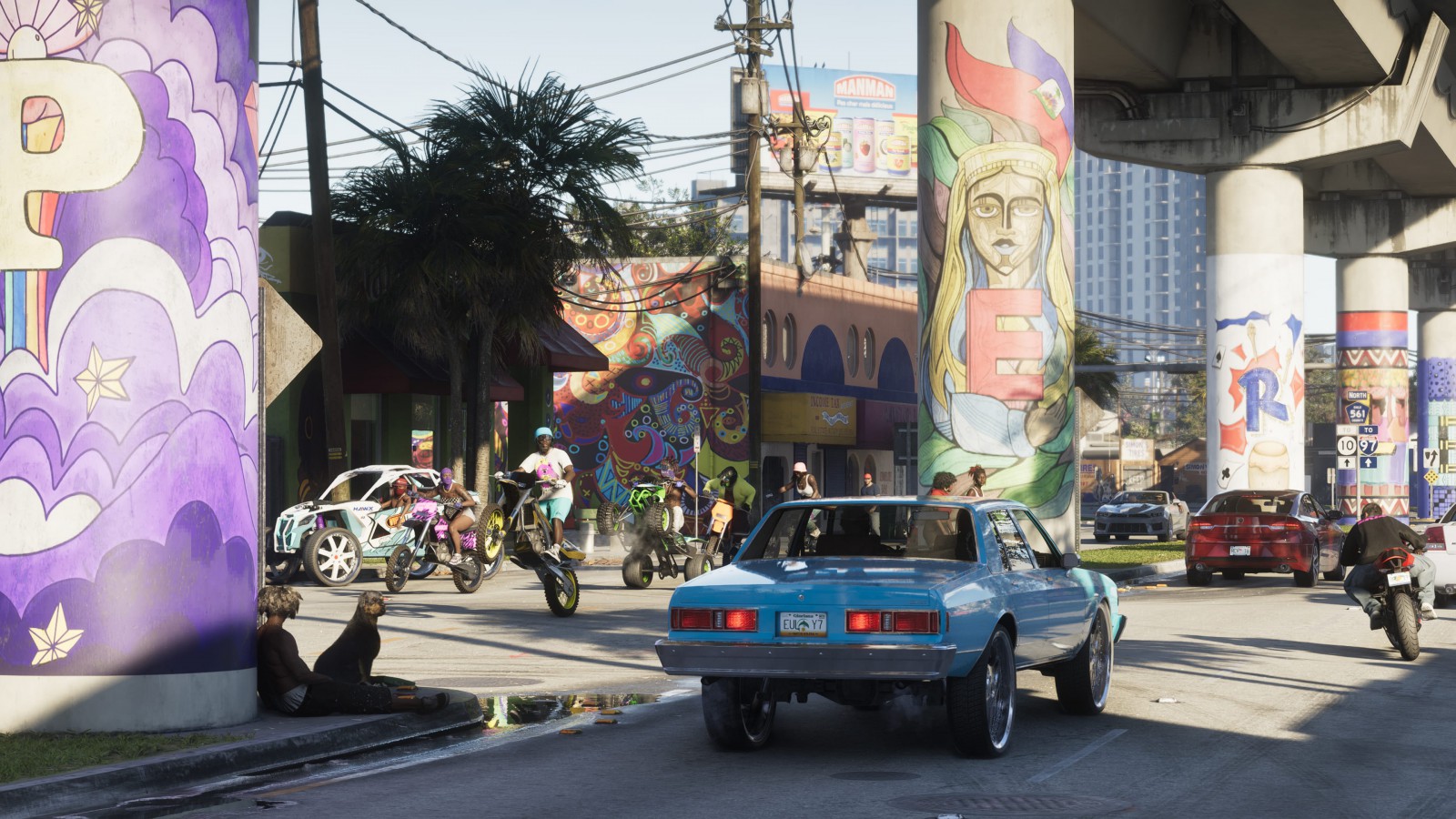
In Rockstar’s official street image, riders and cars occupy a space shaped by elevated concrete, painted pillars and surrounding buildings. The scene communicates a road used by several groups at once. Its interest is not simply how quickly a vehicle can cross it, but how much is happening in the space through which it moves.
That helps explain why an impressive countryside route and an ordinary city intersection can both deserve attention. One makes distance readable through the landscape. The other compresses activity into a small area. A single top-speed comparison would miss most of that difference.
Our Mount Kalaga analysis examines how the wider landscape changes the perception of distance. The driving perspective adds a practical layer: a place becomes familiar through repeated approaches and turns, not only through a marker on a map.
Do not turn a glimpse into a complete race calendar
The public material does not establish every event’s entry rules, rewards or available opponents. A promotional sequence with several vehicles is not enough to invent an online mode or a persistent competitive ranking. For Grand Theft Auto VI, the confirmed variety of environments currently tells us more than an assumed championship schedule.
That restraint still leaves plenty to discuss. Vehicles connect the game’s regions, but the routes can make those connections feel different. Learning a muddy turn and learning a crowded intersection are both forms of learning Leonida. The promising part is not merely having more vehicles to collect; it is having more reasons to care about the ground beneath them.