GTA VI’s Port Gellhorn tells its history through the businesses that stayed open
Rockstar’s former tourist town has motels and nightlife, suggesting continuity as well as decline in its published images.
In this guide
Port Gellhorn introduces a different side of Grand Theft Auto VI’s holiday-state setting. In Rockstar’s description, it is a former tourist destination whose cheap motels, closed attractions and empty shopping strips remain after the visitors have moved on. The buildings are still there; their original promise has faded.
That gives the town a distinct starting point from Vice City’s glamour. It does not require a ruined landscape or an abandoned settlement. The more interesting idea is a place that continues to function, with nightlife and roadside businesses occupying the remains of an earlier economy.
A vacancy sign tells a compact story
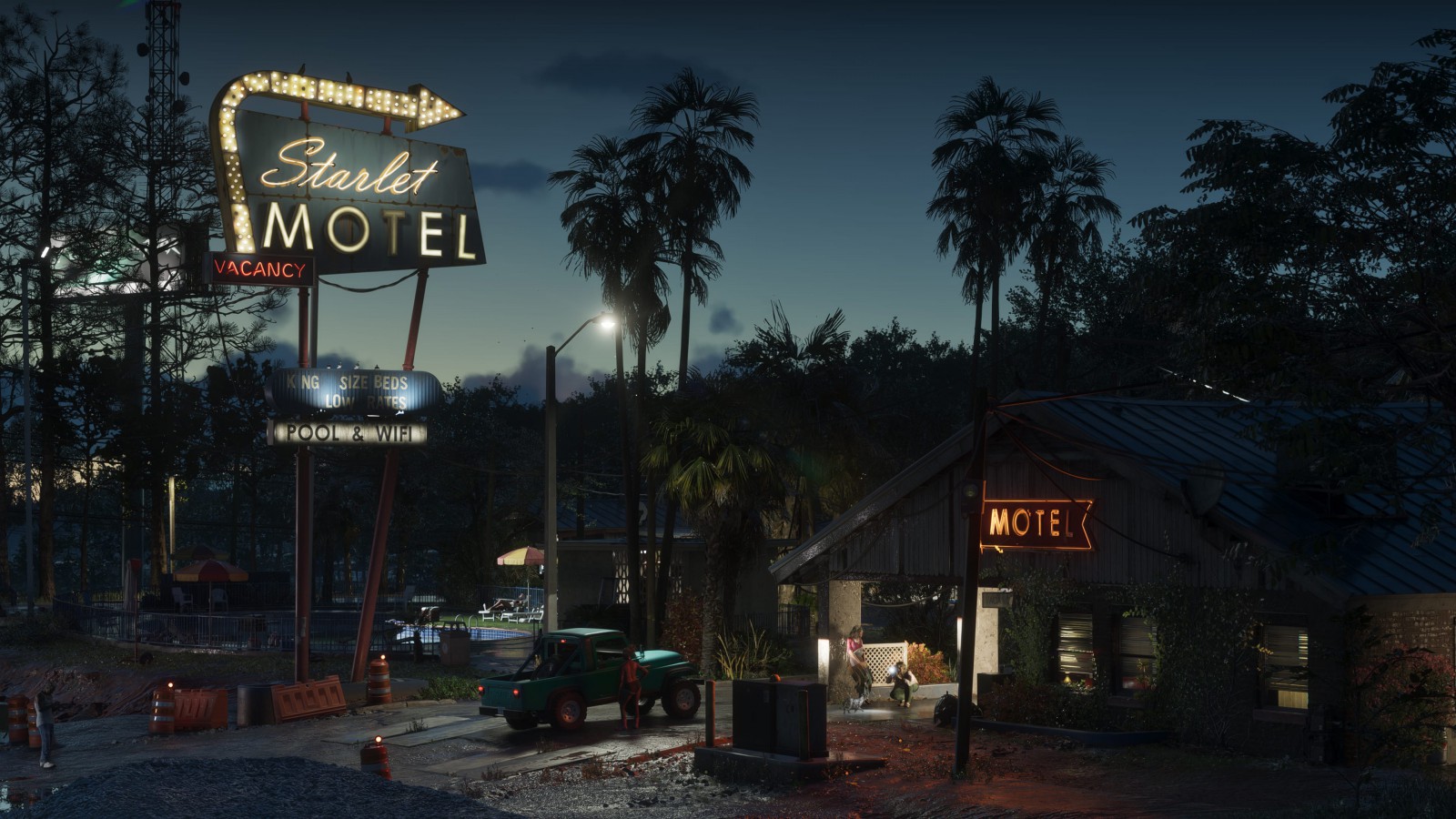
The official motel screenshot shows a lit vacancy sign, parked vehicles and the building’s exterior after dark. It is a straightforward piece of visual evidence: the place is open and advertising space, even as the broader description frames the town through decline.
The sign carries more meaning in that context than it would in isolation. A tourist business is still addressing the road, still asking passing people to stop. The image does not tell us occupancy levels or the owner’s story, but it connects a small visible detail with the town’s stated history.
This is environmental storytelling at an ordinary scale. A location can suggest economic change through the types of buildings that remain and the way they are used. It does not always need a character to explain the past in a conversation.
Nightlife keeps the town from becoming an empty ruin
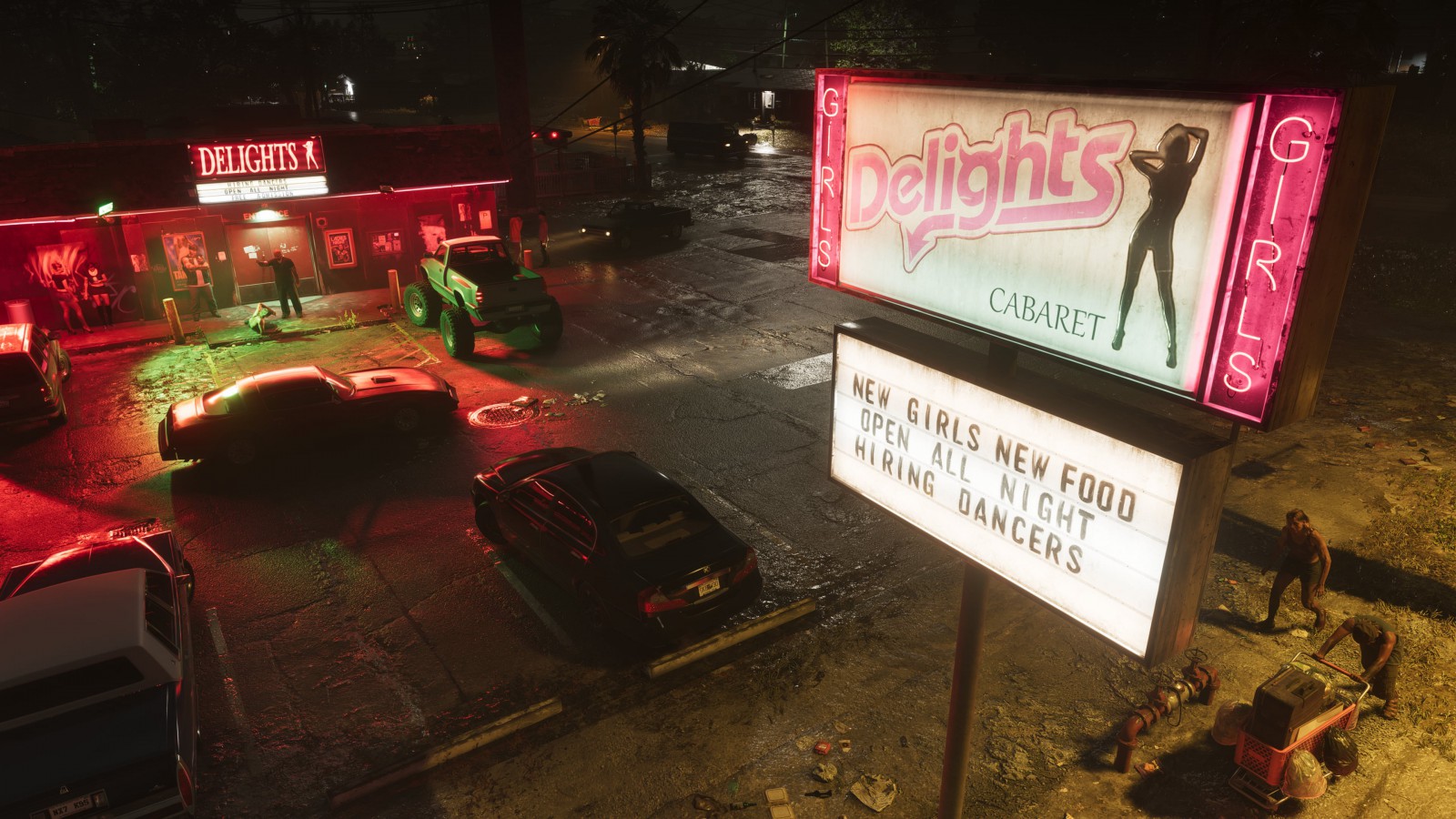
Another official view shows a club’s illuminated signs and parking area, with people and cars outside. The scene gives the town activity and colour without turning it into a second version of the most polished Vice City nightlife images.
That distinction is useful. A place described as having lost tourism can still have local businesses, customers and a social life. Treating decline as total emptiness would flatten the setting into a single visual joke. The published material instead leaves room for everyday activity alongside the worn surroundings.
Nothing in these images establishes that every motel room or commercial building is enterable. A detailed exterior is a visual feature; access to its interior is a separate gameplay claim. The same applies to imagining specific missions from a parking lot or a sign.
The state needs places with different relationships to money
Our Vice City introduction looks at the return to a familiar name. Port Gellhorn’s contribution is to complicate the larger picture. A state built only from successful resorts and spectacular skylines would have less room for the contrast Rockstar is describing here.
The difference is not simply that one place is attractive and another is not. It concerns what buildings were built to promise, who they now serve, and how much of that promise remains visible. The motel still invites a stay. The club still lights up the road. Their presence gives the town continuity rather than reducing it to background decay.
This remains a pre-release reading of official material, not an account of exploring the finished streets. But it identifies a concrete reason to be interested in Port Gellhorn: Leonida’s past can be present in its everyday architecture. A vacancy sign is a small object to place in a large game, and an efficient way to suggest a town that is still waiting for business to return.