GTA VI’s localized storms give Leonida a recent past, one wet road at a time
Rockstar’s weather description is most concrete about moving rain and lingering puddles; the effects of hurricanes remain less defined.
In this guide
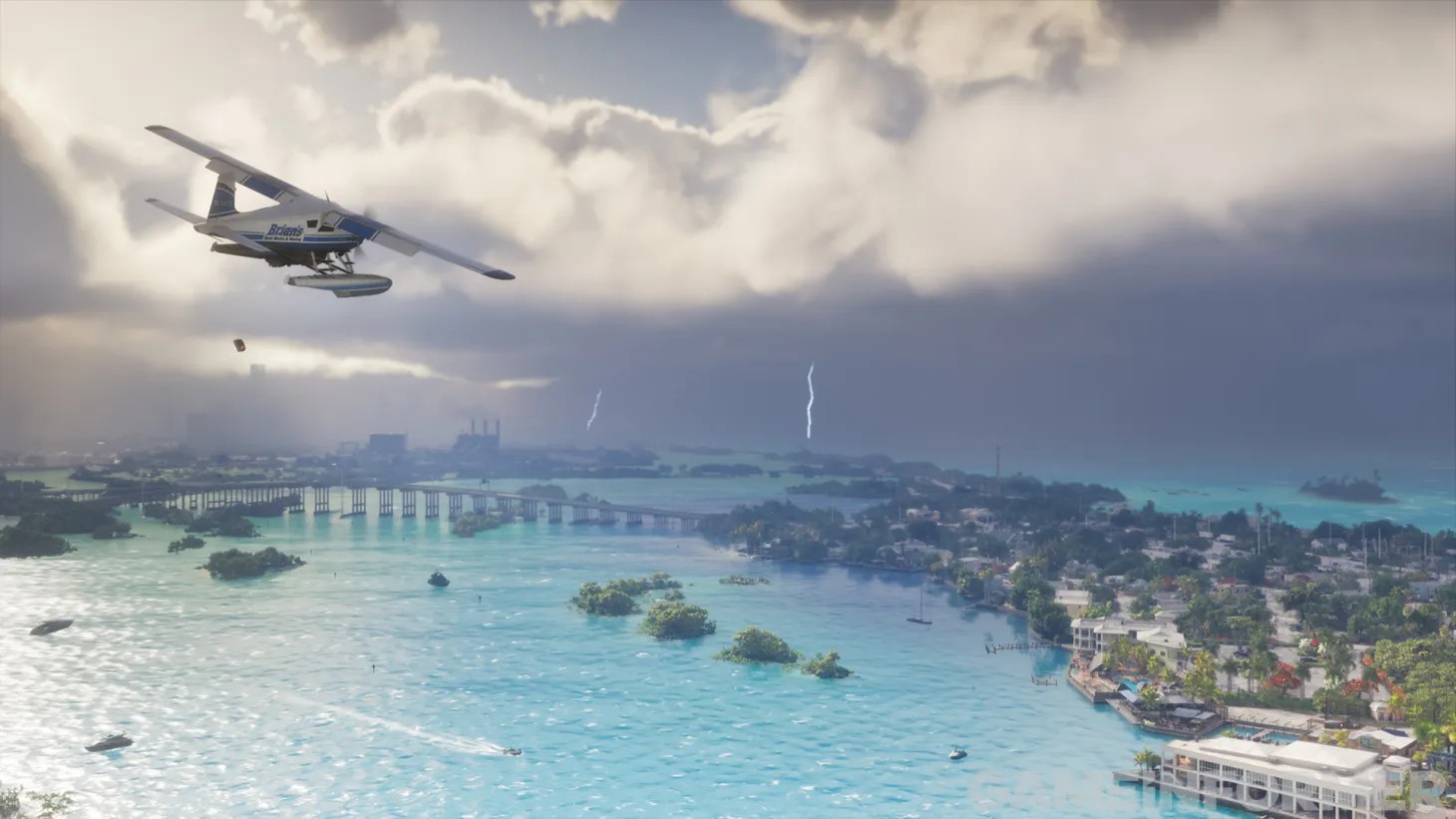
GTA VI’s weather is designed to vary across Leonida rather than simply replace the sky everywhere at once. Rockstar’s explanation to Game Informer in September describes local storms, distant rain and surfaces that remain wet after a shower. Those details make weather part of the geography a player reads, even before asking what a hurricane might do.
This is a launch-week examination of previously announced systems, not a new weather reveal or a hands-on test. The distinction matters because the spectacular part of the announcement—tropical storms and hurricanes—comes with fewer published details about frequency and gameplay effects than the quieter, everyday rain system.
A storm can be somewhere else
A uniform weather change tells the player what is happening now. A visible storm over another part of the landscape also suggests what is happening elsewhere. The scene gains depth through conditions, not just through a longer view distance.
In an open world, that can make an ordinary journey feel continuous. The destination is no longer waiting under the same lighting as the place you left. You may move toward weather, away from it, or arrive after it has passed. These are implications of the localized system Rockstar described, rather than promises of a particular mission or route.
The official image accompanying the report places a dark weather front beyond brighter water and coastal development. It is a useful demonstration of the visual idea. A single image cannot establish how quickly that front moves or whether its position is fully simulated throughout the state.
Wet surfaces give a place a recent past
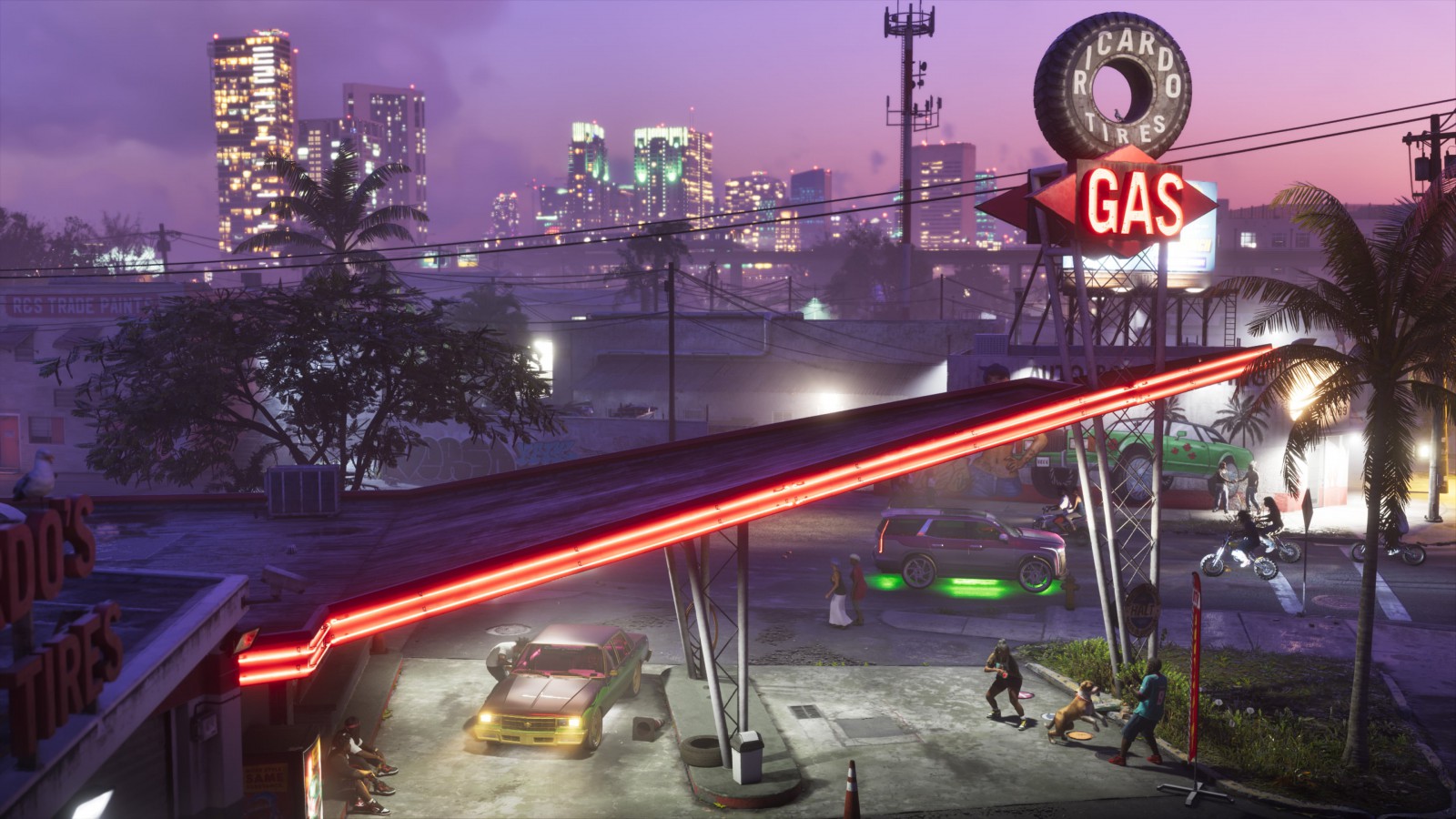
The more revealing detail may be the puddle. Rockstar says the signs of rainfall persist after a storm moves on. That gives the environment a short history that the player can encounter without having watched the event itself.
The effect is easy to understand: a road can show evidence of different conditions from the sky currently above it. The world has changed before you arrived. In visual storytelling, that kind of aftermath often communicates more than another dramatic event happening exactly when the protagonist approaches.
Our earlier look at Vice City’s lighting examines how the published images distinguish places through illumination. Weather adds another layer to that reading: the same street can present different contrasts and reflections. It is not evidence that every visible surface has the same physical properties or gameplay response.
Hurricanes are confirmed; their consequences are not fully detailed
The September report names tropical storms and hurricanes, but explicitly leaves their frequency and effects on play and storytelling unresolved. There is no sound basis here for promising destructible neighbourhoods, a survival mode, a seasonal calendar or a particular evacuation sequence.
Those omissions do not make the smaller confirmed features trivial. A world can become more convincing through consistent transitions without turning every weather event into a disaster set piece. The difference between a dry neighbourhood and a distant downpour is something a player can read while doing almost anything else.
GTA VI’s catalogue entry collects the game’s established release context. For the weather, the strongest pre-release conclusion is more specific: Leonida is being presented as a place where conditions move through space and leave traces. A road still wet under a clearing sky may say more about that ambition than the loudest thunderclap.