GTA VI’s kayaks and diving change the way Leonida can be explored
Official scenes show river-level travel and underwater spaces, without establishing every equipment rule or a multiplayer mode.
In this guide
Water in Grand Theft Auto VI is being presented as somewhere to spend time, not simply the empty space between roads. Rockstar’s published footage and images show kayaking and scuba diving, with a perspective that changes substantially between the surface and the seabed.
The August Extended Look coverage identifies both activities, while Rockstar’s official gallery supplies views of divers among marine life and a kayaker on a wooded river. These are pre-release materials. They support a discussion of the activities shown without requiring a guessed list of underwater missions or collectibles.
A kayak changes the pace of a journey
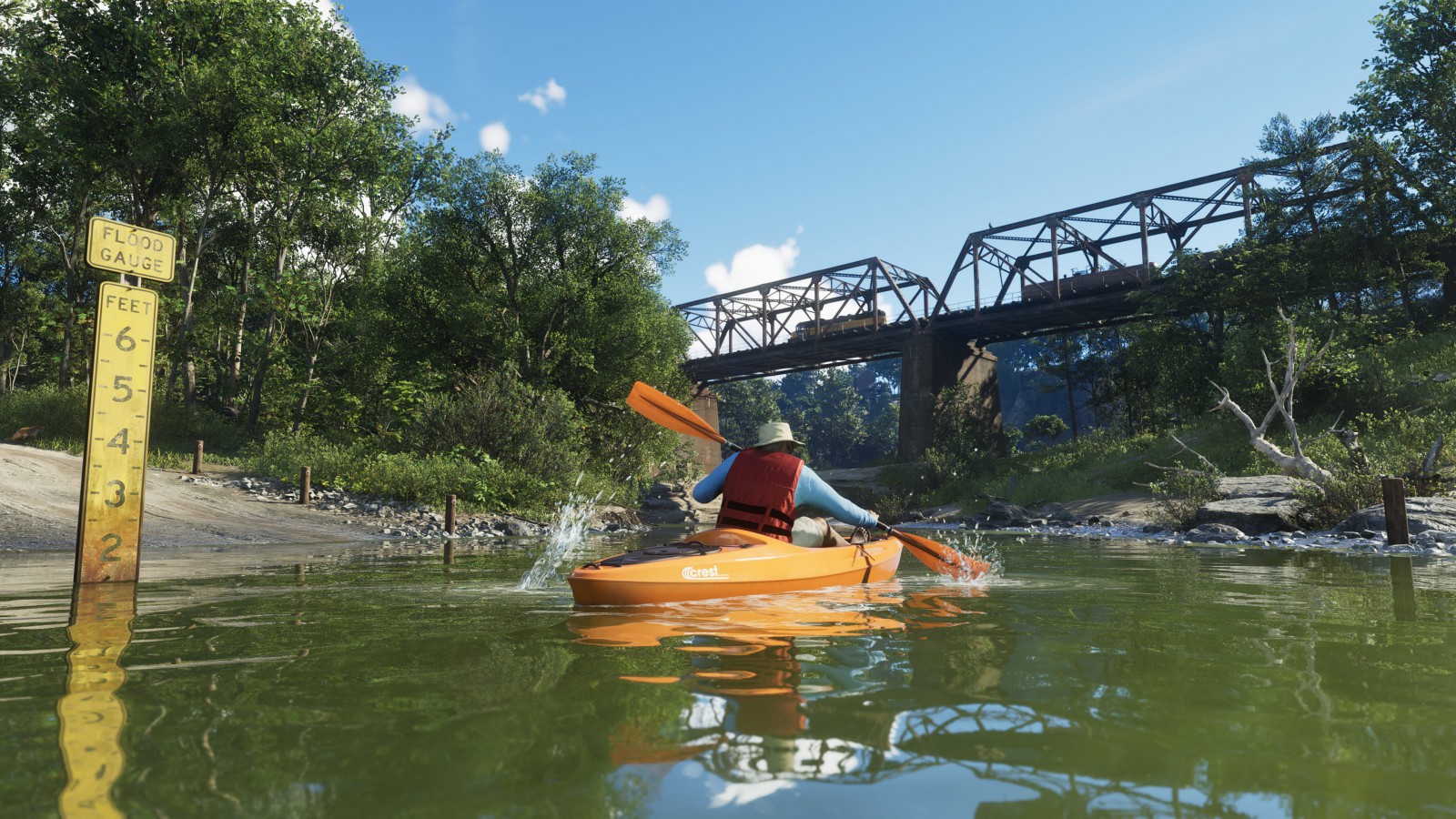
The river image frames a single paddler close to the water, moving toward a bridge. Banks, branches and the underside of the crossing occupy much more of the scene than a distant skyline. The environment is being viewed from within a corridor rather than from a road above it.
That is an important distinction in a game associated with fast vehicles. A slower craft gives nearby scenery more time to matter. It can make the length of a stretch of water perceptible through repeated strokes and passing landmarks, rather than through a speedometer or an estimated travel time.
It would be premature to prescribe how useful a kayak will be for efficiency, stealth or access. The published image establishes the craft and setting, not a complete navigation strategy. Its clearest contribution is a different scale of movement: the river becomes a place with edges and texture, rather than a line crossed on the way to something else.
Diving adds a vertical dimension
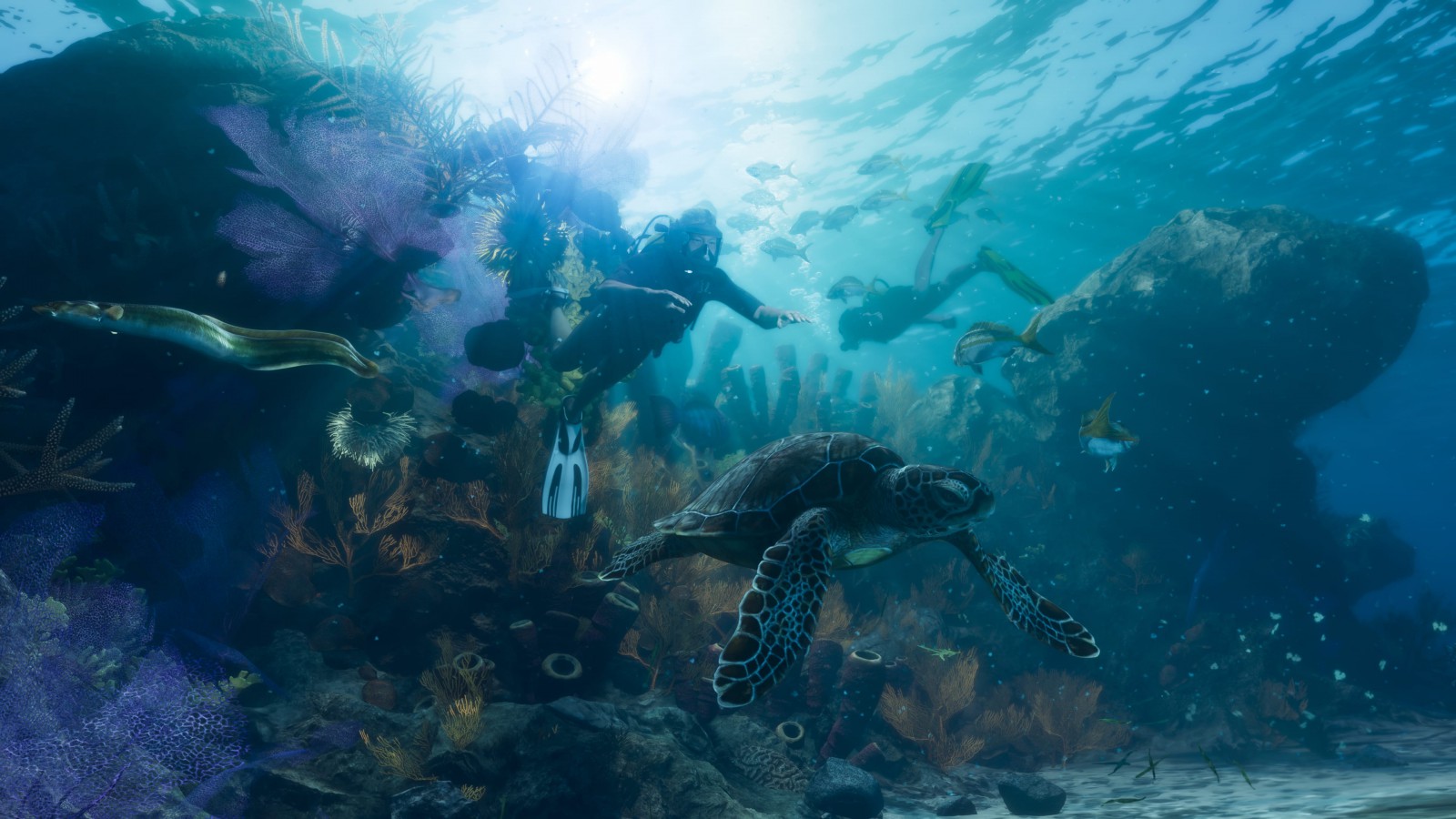
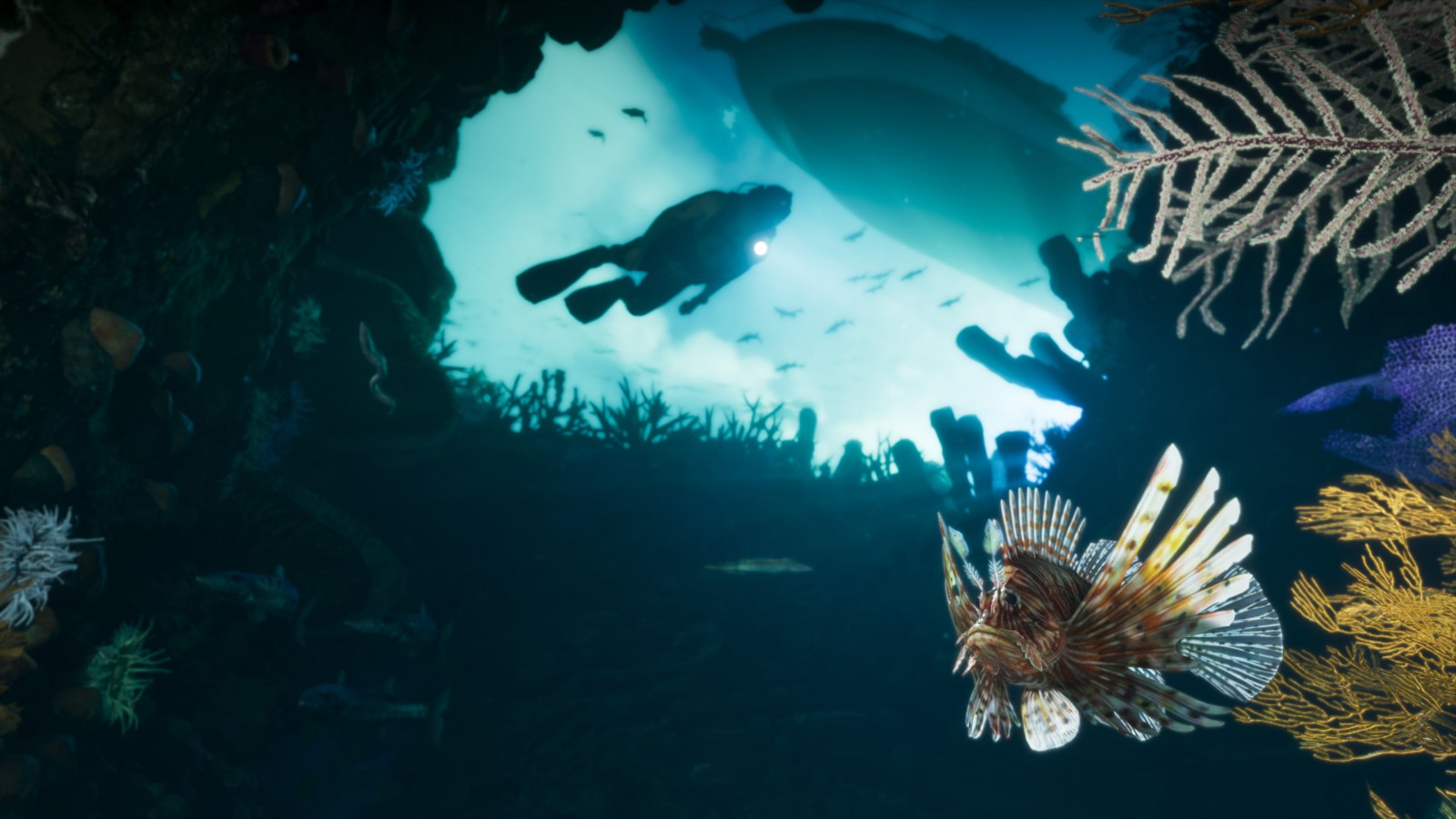
The official Keys image shows two divers surrounded by coral, fish and other marine life. Another published view looks through a submerged opening toward brighter water. Together they show how moving below the surface changes the visual language: overhead light, enclosed passages and depth replace the familiar arrangement of streets and buildings.
There is a useful practical distinction between water visible from land and space designed to be explored underwater. A coastline photograph may suggest that a world is large; a diving scene suggests that part of its volume can also matter. These are different ways of giving a setting substance.
The published scenes do not settle oxygen limits, equipment progression, underwater combat or the extent of accessible caves. They should not be read as a promise that every patch of sea has equally detailed content. What they do offer is a concrete alternative to judging the world only by its road network.
Shared time does not automatically mean multiplayer
Rob Nelson’s October interview with IGN includes kayaking and diving among activities Jason and Lucia can do together. That sits within the two-protagonist design of the game. Seeing two people in an image is not, on its own, evidence that two human players control them simultaneously.
Our introduction to Jason and Lucia explains the partnership without revealing plot outcomes. Water activities add a different setting for that relationship: a shared outing can be meaningful even when it does not involve a chase or a major objective.
Leonida’s waterways therefore deserve attention for more than their contribution to a map’s dimensions. A river travelled slowly and a passage approached from below can make a familiar landscape feel different without adding another kilometre to its boundary.