GTA VI’s 170-plus animal species matter most when they belong to the same world as its people
The developer’s wildlife account combines variety, material detail and discovery; the species total alone cannot describe behavior.
In this guide
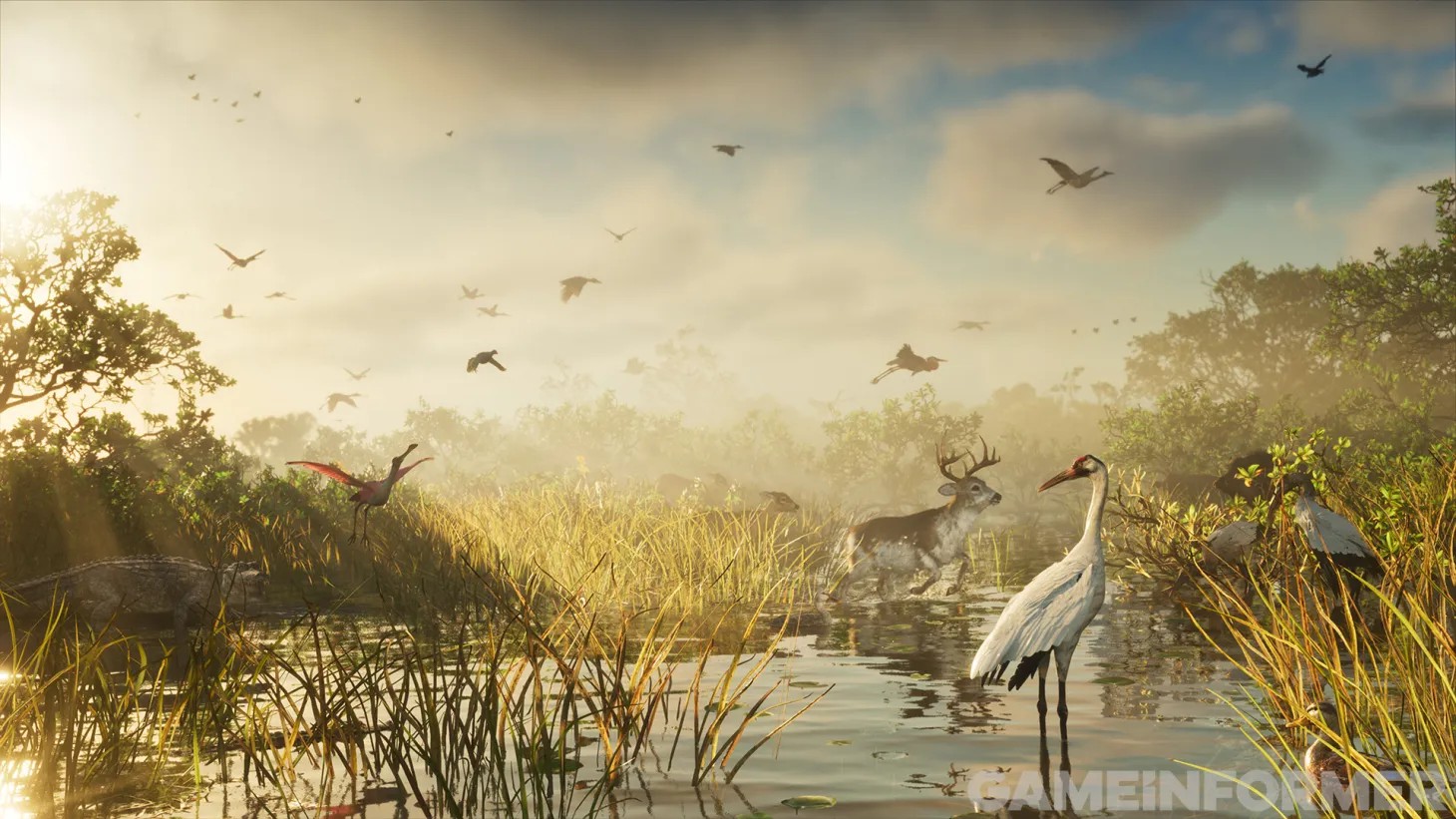
Rockstar says Grand Theft Auto VI contains more than 170 animal species across land, sea and air. The more interesting part of that September disclosure is the mixture: Leonida’s wildlife includes animals associated with Florida’s natural habitats alongside invasive species and creatures living close to people.
The figure comes from Game Informer’s original developer coverage, not a count from a finished retail copy. It should be understood as Rockstar’s stated scope. A large species list can describe variety, but the placement and behavior of those animals determine whether a player experiences a living setting or merely an extensive collection.
Wildlife belongs in streets as well as wilderness
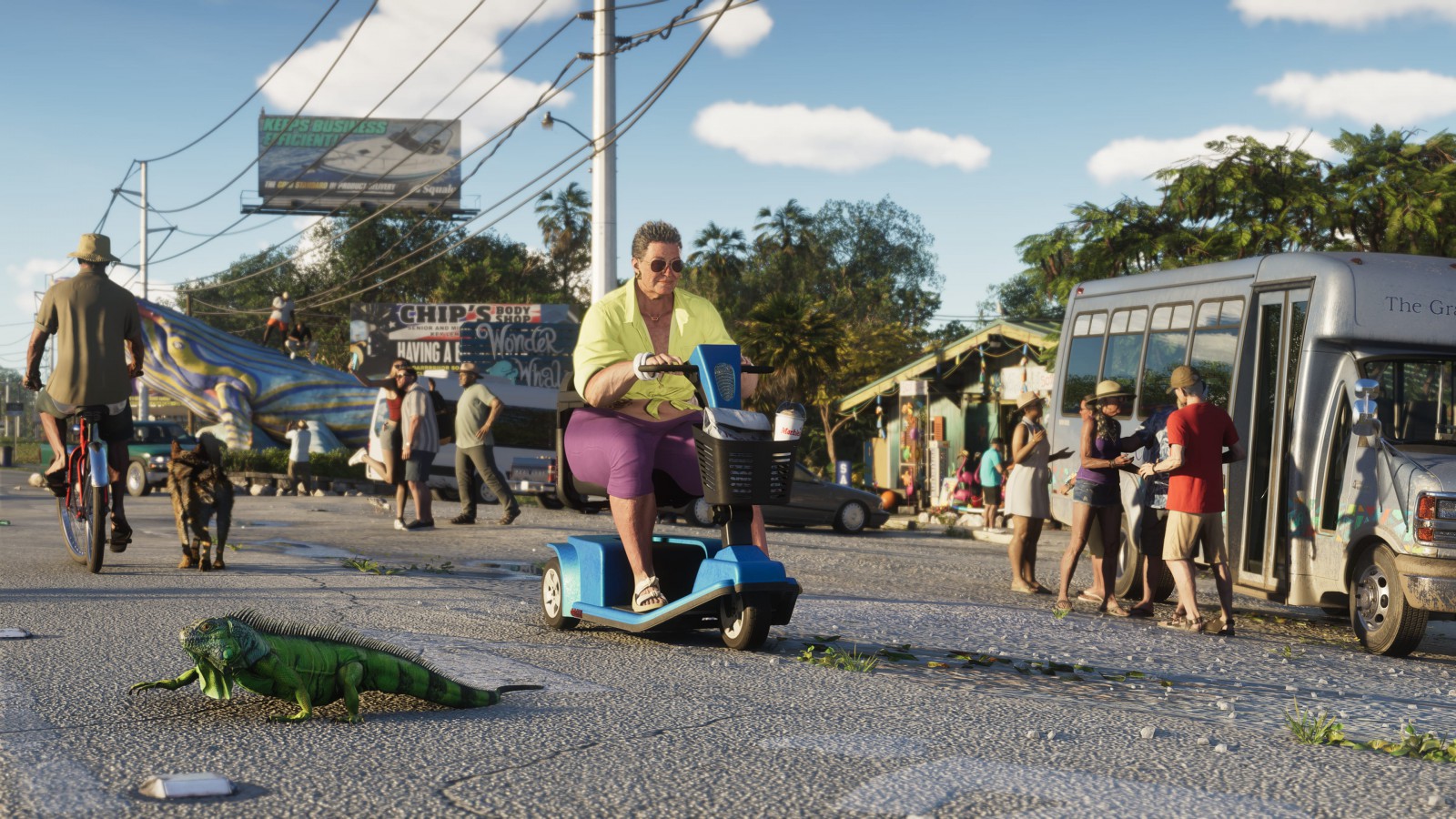
The official screenshot gallery offers a particularly good example: an iguana occupies the foreground of an everyday street scene in the Keys, with pedestrians and a mobility scooter behind it. The animal is not isolated on a pristine nature postcard. It shares space with the routines of a town.
That choice gives the scene a different character from a generic tropical backdrop. Nature is allowed to be ordinary, inconvenient and close. The player does not necessarily have to leave the built environment before noticing it.
There is also a useful limit to what the image proves. It shows the juxtaposition and the intended visual detail; it does not establish a complete behavioral schedule, a population simulation or a particular reaction when the player approaches. Those are separate claims that require observation or explicit documentation.
Feathers, fur and light do different jobs
Rockstar’s account describes work on animal appearance, including feathers, hair and fur, and effects such as iridescence and translucency. These are more specific than simply increasing the number of creatures. Different materials respond differently to light, so representing them well helps distinguish an animal at a distance and up close.
A bird should not need a label to look different from a mammal. At the same time, a convincing coat or feather surface does not prove sophisticated behavior. Rendering and simulation contribute different parts of the impression, and one attractive screenshot cannot measure both.
Rockstar presents this work as building on the Red Dead series. Red Dead Redemption 2 is therefore a relevant point of reference, but not a licence to copy all of its hunting systems into a GTA VI feature list. A shared development history can explain an ambition without guaranteeing identical mechanics.
Discovery can remain a discovery
The developer report also describes categories of harder-to-find animals while withholding their identities. There is no need to fill those gaps with speculation or turn a spoiler-free introduction into a location checklist. Knowing that the world rewards attention is enough before release.
This is where the wildlife connects with Leonida’s regional variety. A coast, a wetland and a developed street can communicate their differences through the animals that occupy them, alongside vegetation, buildings and sound. That is a stronger use of wildlife than distributing rare creatures evenly to decorate a map.
The 170-plus total is a headline. The iguana sharing a street with a scooter is a more revealing image of the design: a world feels inhabited when its nonhuman residents appear to belong there, even when nobody has assigned the player a task involving them.