Grado’s GW200 goes wireless and leaves the room audible
The $329 GW200 pairs an open grille and a 44 mm driver with multipoint Bluetooth. Its analogue input can keep the music playing even after the battery runs out.
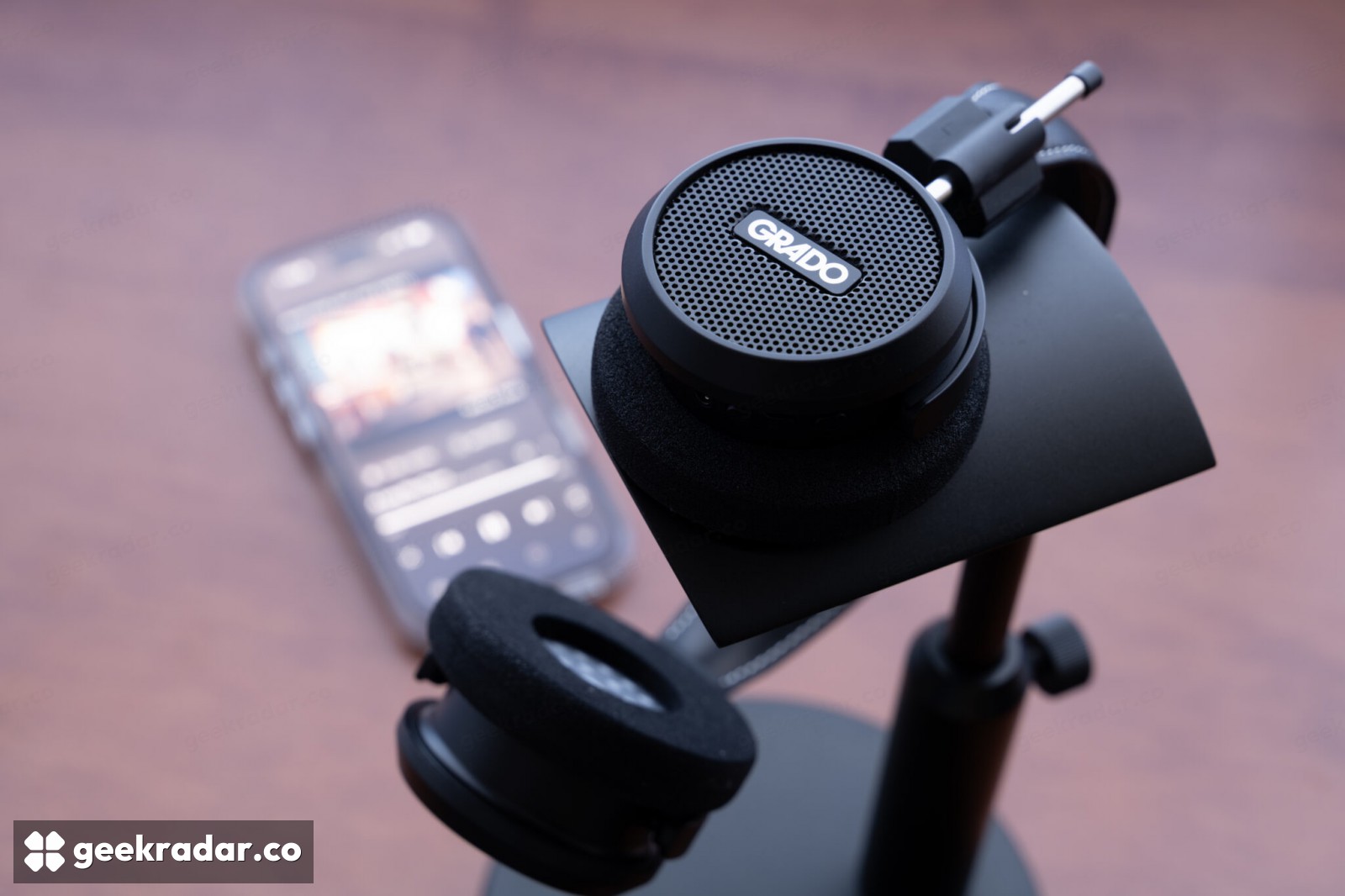
Grado’s new GW200 headphones let you walk away from your music player while staying within earshot of the room. The mesh on the back of each earcup is open to the air. Bluetooth removes the cable, but it does nothing to stop a conversation from reaching your ears or someone beside you from hearing part of your record. That makes the GW200 an unusual December release at $329 in the US and £329 in the UK. Grado’s announcement gives the same month for both markets.
What the grille changes
Most people buying wireless headphones for a train journey want some distance from everyone else on the train. An open back gives sound a path in both directions. On a busy carriage the noise competes with quiet passages. At a desk in a quiet room, that same design lets you hear someone speak without first finding a transparency-mode button. The person at the next desk gets a vote, too: sound escaping through the grille may be more of a drawback for them than it is for you.
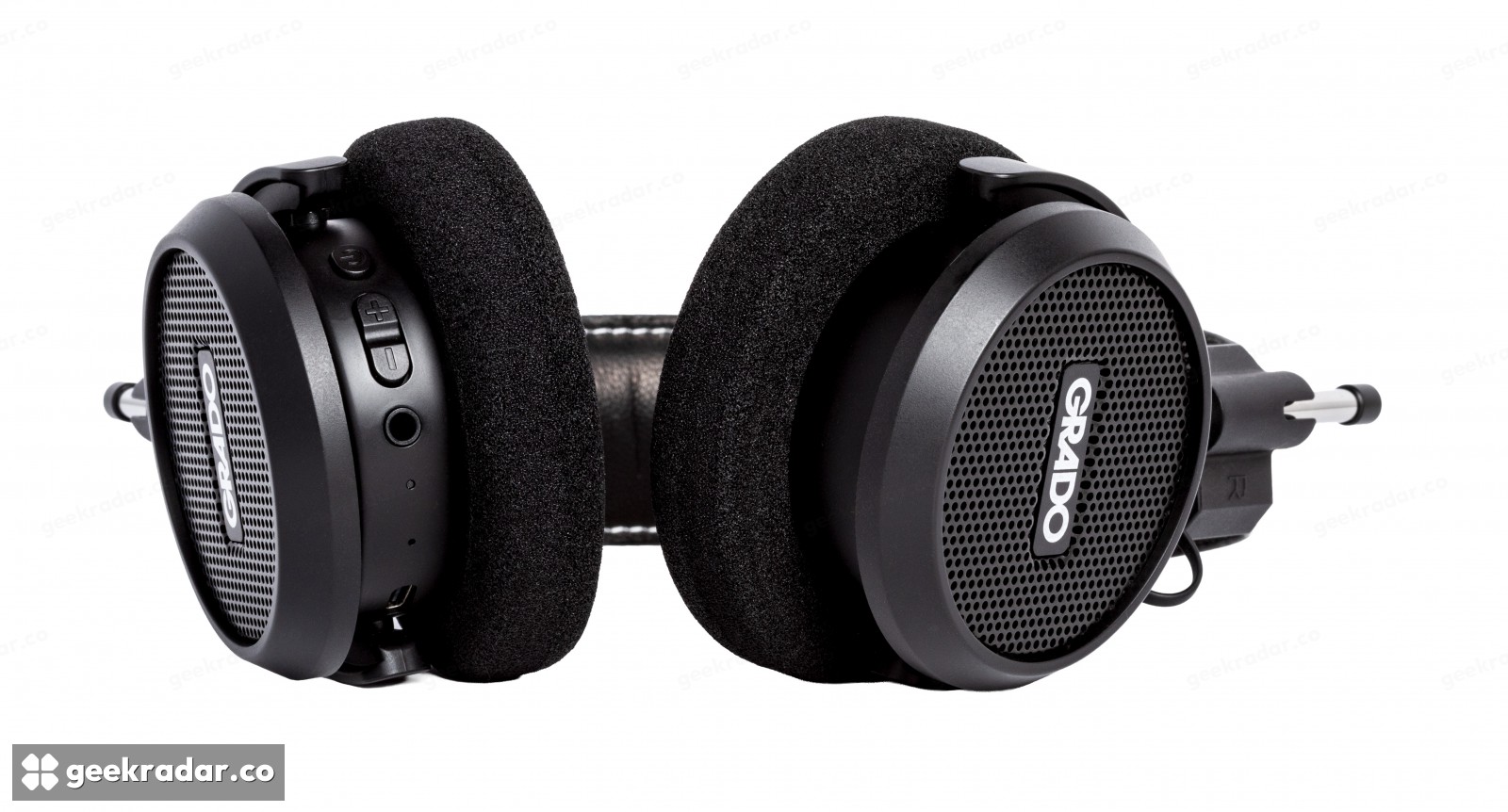
Behind the mesh is a new 44 mm dynamic driver. Its diaphragm, the moving part that sets air vibrating, is made from a paper composite derived from designs Grado uses in its larger Signature drivers. The GW200 comes with the company’s F cushions, which have slits that allow air through the foam. Grado says the pads are part of the acoustic tuning and that the new housing accepts its other cushion types. Swapping pads changes how the ear sits relative to the driver, so it’s a choice to make for sound as well as fit. The design explains why two pads can behave differently. It takes a listening comparison to say which one you’ll prefer.
Two ways to keep a record playing
Over Bluetooth 5.4, the GW200 supports multipoint. You can keep a laptop and a phone connected instead of pairing again when moving between them. Grado also lists AAC, SBC and several aptX variants including aptX Lossless. The badge on the headphones covers only one end of that connection. The source device must support the codec as well, so check the player you already own before paying for a particular wireless feature. Qualcomm explains how aptX compatibility works.
The simpler connection may prove the more durable one. Grado rates wireless playback at more than 60 hours per charge. When the battery runs flat, the supplied 3.5 mm cable can drive the headphones passively from an analogue output. USB-C is the charging connection. A laptop with a headphone socket can therefore carry on playing immediately. A phone with only a USB-C port will need an audio adapter for that same wired route. Sony’s MDR-3R takes a different approach to the USB-C socket.
TechRadar’s launch coverage puts the new model in the line started by the GW100. For a prospective buyer, the most revealing detail remains the grille. You can change the pads, the playback device and the cable. The room where you listen stays part of the experience in every configuration.