
Crusader Kings III: Silk & Silver gives a dynasty power without starting with a crown
Merchant companies, monopolies and republican assemblies connect wealth to government in the November 17 expansion.
Crusader Kings III’s next major expansion gives a dynasty a route to influence that begins with a company rather than a crown. Silk & Silver arrives on November 17, introducing landless merchant families, trading monopolies and playable republics. Its central idea is that commercial relationships can become political leverage, with a family’s business providing both the money and the reasons to intervene in government.
The expansion’s feature page describes two connected forms of play: building a merchant operation and competing as a patrician family inside a republic. For a game organised around dynastic continuity, that opens a useful alternative to treating territorial expansion as the only visible sign of success.
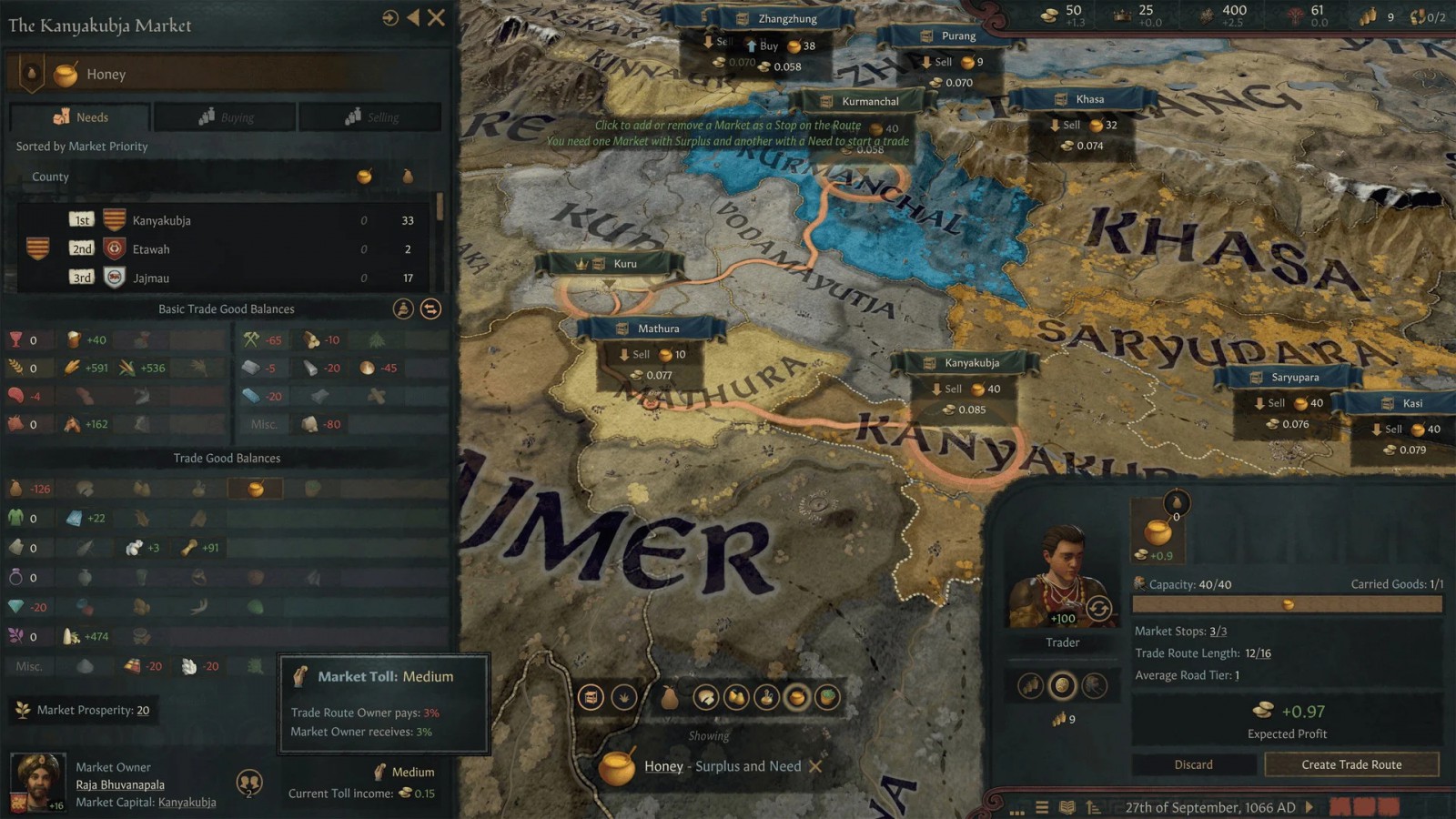
A family business needs more than a profitable route
Merchants trade more than 40 goods and can specialise as Caravaneers, Creditors or Artisans. Those paths emphasise moving goods, lending money to rulers or creating artefacts. A company develops expertise in the products it trades, while its mansion serves as a base that can be improved to support more routes and advantages.
The interesting part is how the commercial and political systems meet. Paradox describes seeking patrons, influencing rulers and obtaining exclusive rights in a market. A monopoly is therefore a political achievement as well as an economic one. The merchant needs relationships that make the deal possible and protect its position against competitors.
That changes the meaning of a powerful neighbour. A ruler can be a customer, debtor or patron, rather than only a rival or potential liege. It gives a landless family a reason to care about political outcomes without first becoming a conventional territorial power.
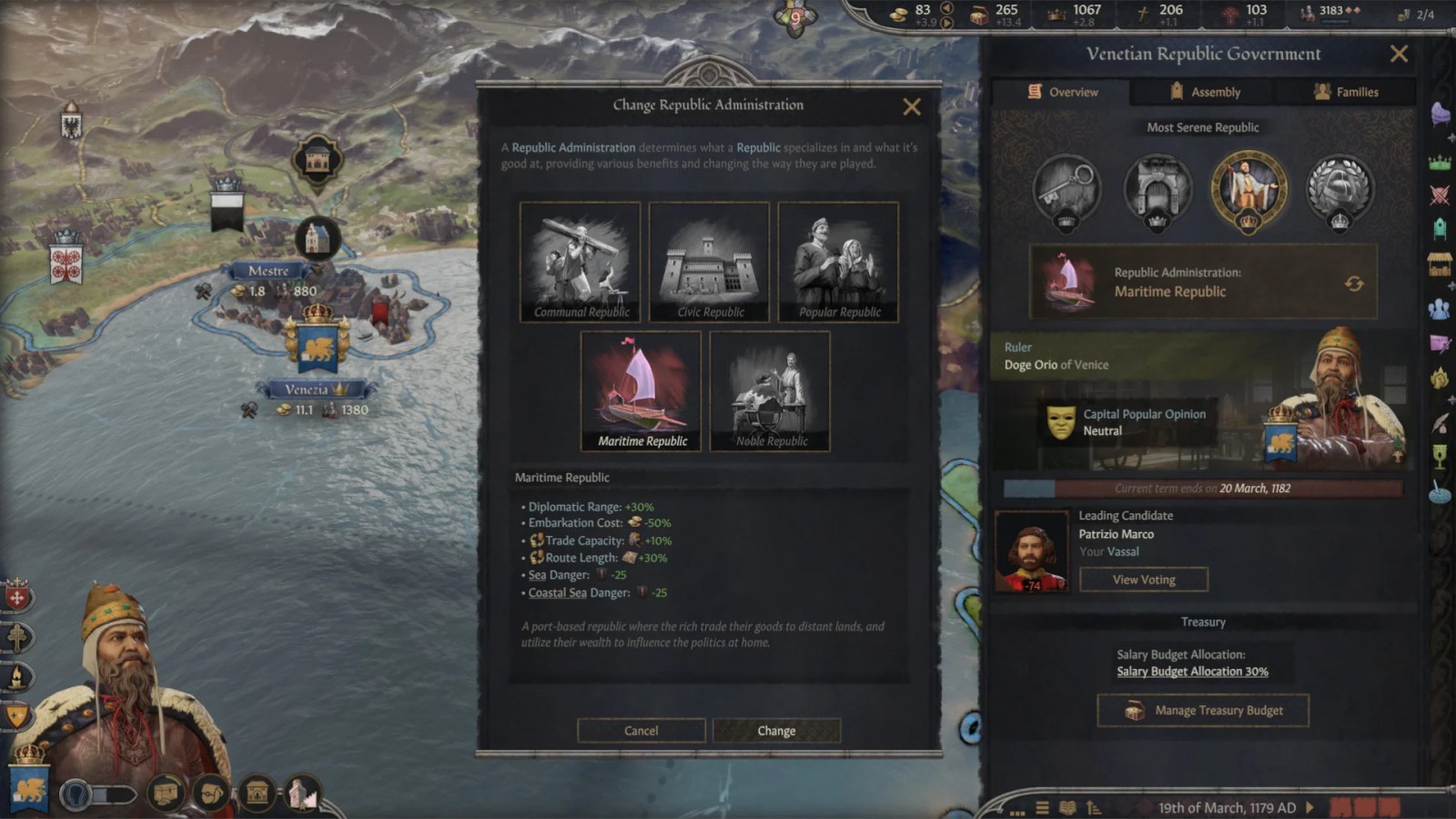
Republics make the rules part of the contest
Inside a republic, families compete for the dogeship and influence over the assembly. Laws govern matters including leadership terms and use of the treasury. Choosing an administration also changes the republic’s emphasis, from maritime commerce to other forms of political organisation.
The distinction between private wealth and public authority becomes part of the strategy. A rich family has resources, but must translate them into offices, votes and rules that endure. Rival families remain relevant because their influence can affect the institutions through which power is exercised.
Trade posts extend activity into foreign counties, while leagues connect republics through commercial and military benefits. These systems suggest ways for influence to cross borders without making every interaction a conquest. The announcement describes their intended functions; it does not provide independent evidence that any particular republic strategy will outperform established governments.
A historical setting for the new machinery
Two bookmarks frame the expansion. Channels of Commerce begins in 1066 and focuses on medieval merchants; Guelphs & Ghibellines begins in 1178 and places northern Italy’s papal and imperial conflict at the centre. Italy belongs in this story because it is part of the expansion’s historical subject, rather than an appended availability aside.
The announcement gives a standalone price of $29.99, £25.99 or €29.99 and includes the expansion in Chapter V. Owners of that pass should check their entitlement before purchasing the same content again. The November 17 date concerns this PC expansion announcement; it should not be transferred to console editions without a separate confirmation.
For existing players, the worthwhile question is whether they want a campaign whose important relationships are commercial as well as dynastic. Silk & Silver’s strongest prospect is that a family can lose an election, renegotiate its position and continue pursuing influence through the business it built. A dynasty’s power need not disappear just because its name is no longer on the highest office.