BBC iPlayer reached 15.4 million weekly accounts. Why are TV licences falling?
A forecast puts fewer than half of UK households on course to pay by 2033–34. A live match and its replay show why streaming growth alone cannot settle the BBC’s funding question.
A UK household can watch a football match live on a streaming service, then return to the same app the next evening for a film. The live match requires a TV Licence. The on-demand film generally does not, unless the app is BBC iPlayer. That distinction is at the centre of the debate over who should pay for the BBC as more viewing moves online.
The question drew fresh attention on November 23, when The Guardian reported on projections prepared for Reset Tech. Under the model’s assumptions, fewer than half of UK households would pay the fee by 2033–34 if the system continued on its present course. That is a scenario for the next charter period. Households deciding what to watch tonight are still covered by the existing UK rules.
Why the play button matters more than the screen
Watching or recording television as it is broadcast requires a licence, including on a laptop or phone. A commercial subscription already paid for by the viewer does not cover the licence for live TV. For a practical example, consider Netflix’s live U2 halftime show and its replay. The same performance can be a scheduled broadcast at one point and an on-demand title later. BBC iPlayer is the important exception: watching a BBC programme there on catch-up or downloading it also requires a licence.
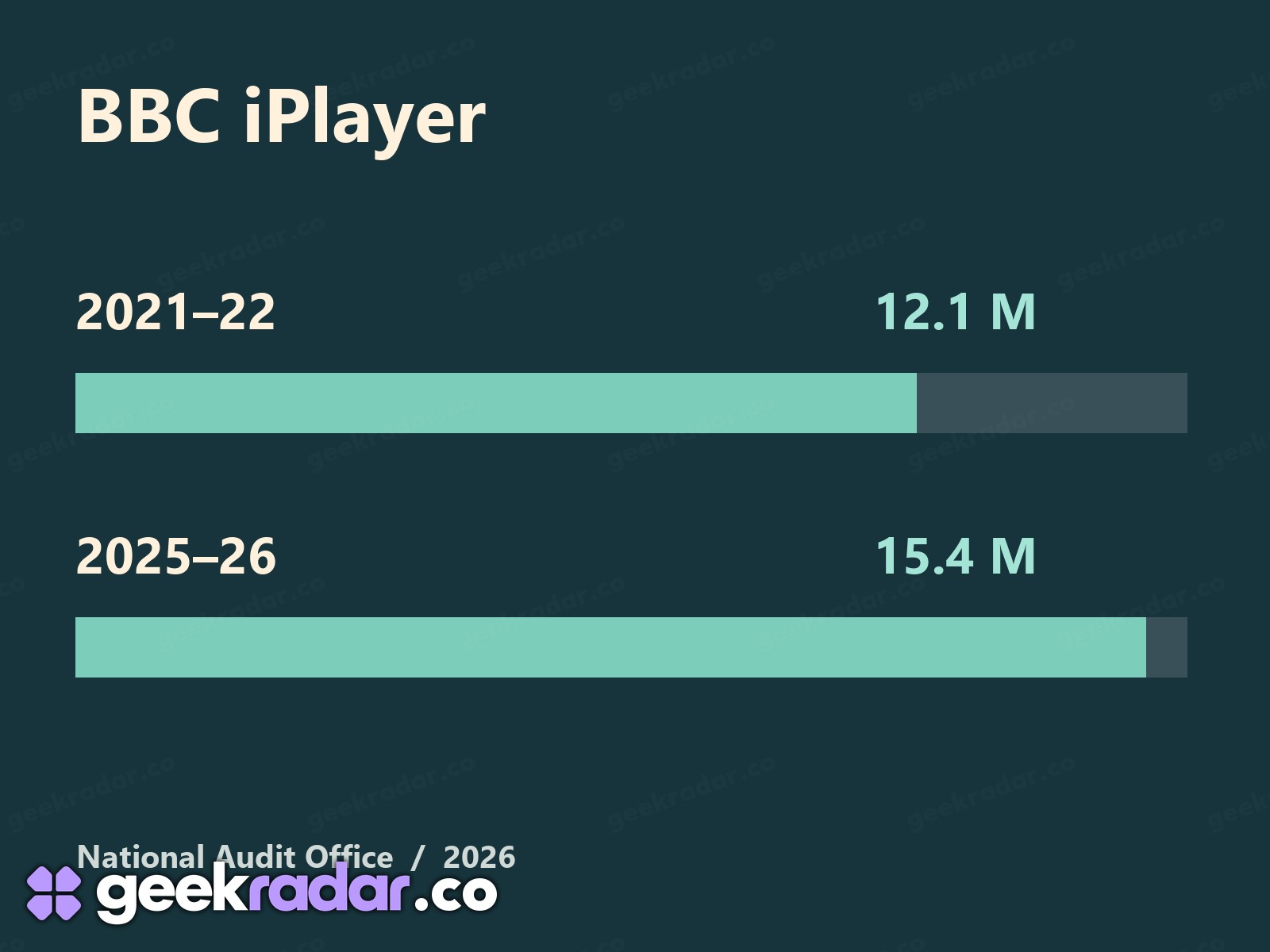
That arrangement makes a streaming audience an awkward measure of the BBC’s income. The National Audit Office’s full report puts iPlayer at 15.4 million active accounts in an average week in 2025–26, up from 12.1 million in 2021–22. Someone in a licensed household who switches from a BBC channel to iPlayer adds activity to the app without generating a second fee. Someone who opts exclusively for on-demand titles from commercial services can own precisely the same screen and fall outside the current rules.
What a broader fee would change
The House of Commons Library records 23.3 million licences in force in March 2026, down from 23.8 million a year earlier. It would be a mistake to subtract weekly iPlayer accounts from licences in force and call the difference missing payments. One counts active logins over a week and the other counts licences on a date. One licence can usually cover several viewers at home.
The Commons culture committee recommended broadening the base for the next charter, due to begin in January 2028. It also wants the individual fee to fall if BBC funding can be sustained. That pairing explains the stakes better than a headline about a streaming charge. A household paying today could see a smaller bill, while a neighbour who watches only commercial box sets could face a bill for the first time. The government’s choice is where to draw that boundary when the two households are using identical televisions.