AMD’s Linux driver lists two new NPU revisions without naming a laptop
The code submitted for Linux 7.5 distinguishes NPU10 from NPU11 with a single revision field. The names tell us how the driver selects a device configuration; they reveal little about the speed of an AI model.
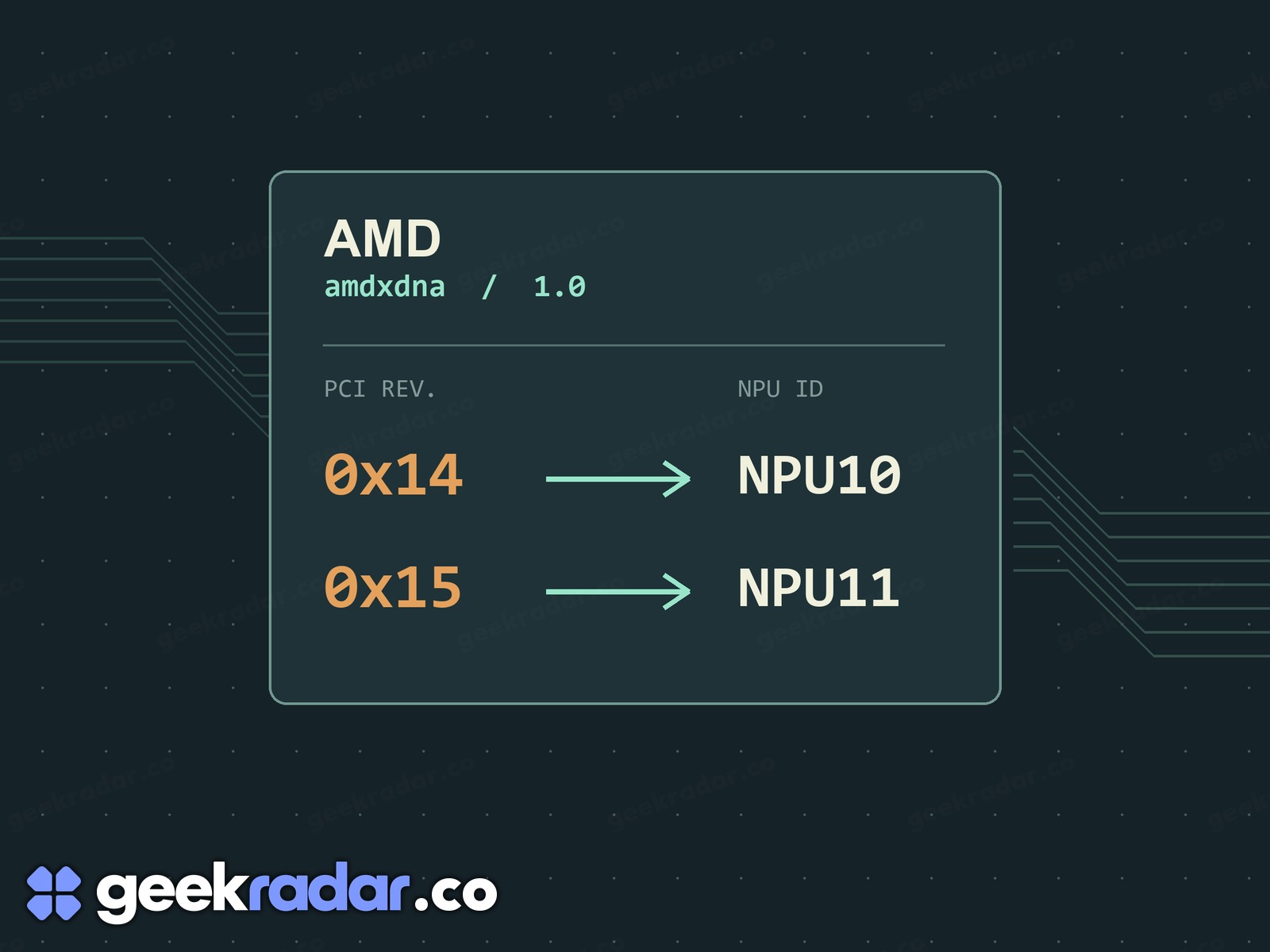
Take a device that reports the PCI identifier 0x17f1. In AMD’s proposed Linux driver, revision 0x14 sends it down the NPU10 path. Change the revision to 0x15 and the driver chooses NPU11. These are two new entries for AMD’s neural processing units, the accelerators that can run certain AI workloads alongside a PC’s CPU and GPU. Neither entry names a retail processor or a laptop.
The entries arrived in a November 19 pull request intended for Linux 7.5. The request also raises the version of the kernel’s amdxdna driver from 0.10 to 1.0. At the time of writing, the kernel release page still lists 7.4 as a release candidate. Someone buying a laptop today should read the submission as evidence of work heading upstream, rather than a feature already delivered by their Linux distribution.
What the extra number buys the kernel
A PCI device identifier helps the operating system recognise the hardware it has found. On its own it need not describe every revision of that hardware. The submitted device table makes this particularly easy to see. Three identifiers appear for NPU10, then the same three appear again for NPU11. Checking the revision alongside the identifier allows the driver to pick the right configuration in each case. The 0x prefix just means the numbers are written in hexadecimal.
The same source explains the 1.0 label in a short version history: the driver now declares official support for AMD’s AIE4 devices. That number belongs to the software. It gives you no throughput figure for either of the newly listed revisions. By contrast, the commercially available Ryzen AI 9 HX 370 is a processor a customer can actually identify by name. AMD lists its NPU at up to 50 TOPS. The pull request supplies no equivalent figure for NPU10 or NPU11 and makes no connection between those IDs and that chip.
What has to happen before a model runs
Even on a known processor, recognising the device is only one step. The kernel’s NPU documentation describes a compiler that prepares work for the accelerator and a runtime called XRT that communicates with the kernel driver. The software above the driver still has to know how to put that particular workload on the NPU.
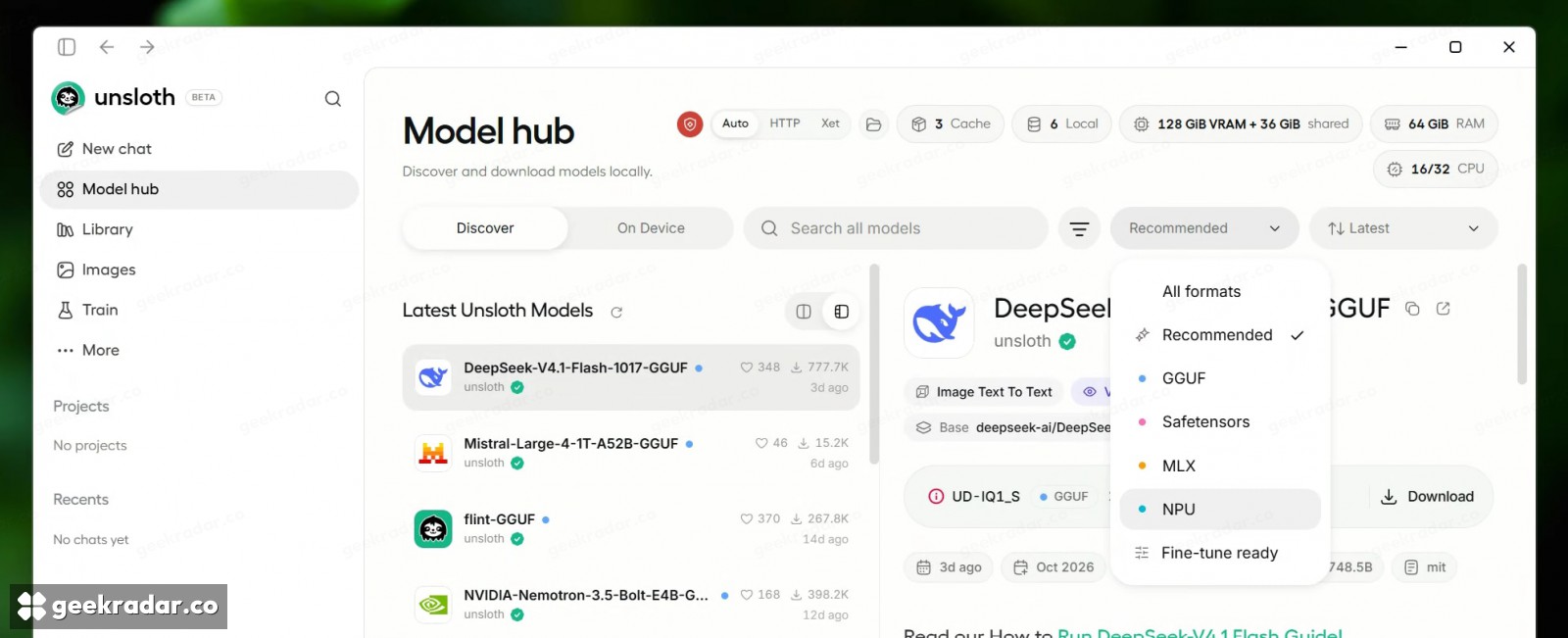
There is a concrete example on existing hardware. In AMD’s Unsloth Desktop guide, a user filters the model catalogue for NPU-compatible choices and downloads one of those builds. Lemonade and FastFlowLM connect the application to the XDNA 2 inference path. A working chat window alone would tell you little about which processor generated the answer; the choice of model build and execution path matters.
For someone considering an AI laptop, those are two separate questions to bring to a specification sheet. Can the operating system recognise the accelerator in this machine? Can the application run the model you want on it? AMD’s new table gives Linux two more precise answers to the first question. The second still has to be answered one model at a time.