OpenRouter removes 125 endpoints from zero-retention routing after provider incidents
Three providers are off the platform. The wider endpoint review includes precautionary exclusions, and two providers’ reports show how a prompt can be exposed at different stages.
OpenRouter has taken three inference providers off its platform and removed 125 endpoints from the routes eligible for zero data retention. Those are two different decisions. A provider can operate several endpoints, and OpenRouter says it excluded some as a precaution. The figure of 125 tells a developer how much the list of eligible routes has changed. It cannot tell a customer whether anyone read their prompt. OpenRouter says it has contacted potentially affected customers and that the investigation found no evidence of unauthorized access to OpenRouter itself. OpenRouter’s November 22 notice.
One model name can lead to different operators
Consider an app that sends a model a paragraph from an unpublished report and asks for a summary. The app makes one request to OpenRouter. Behind that address, different companies may host the same model. Choosing a model answers a question about what generates the summary. Choosing a route also determines who handles the unpublished paragraph.
In its account of the investigation, security firm Dragos describes placing unique markers in test requests and detecting subsequent activity involving those markers. That gives investigators evidence to follow beyond a provider’s written policy. It does not count everyone affected or establish that every endpoint removed on Sunday exposed data. The individual provider notices are more revealing about where content became accessible.
Together AI says someone downloaded stored samples from a subset of its June and July serverless inference requests. The company says the samples had been collected with authorization for software testing. A credential exposed in a public code repository subsequently gave an unauthorized party access to the private collection. Phala’s preliminary report describes a different problem: a compromised deployment made request data visible while the service was processing it. A policy governing what gets saved after a response and the protections around a running server address different moments in the life of the same paragraph.
What changes when a route loses its label
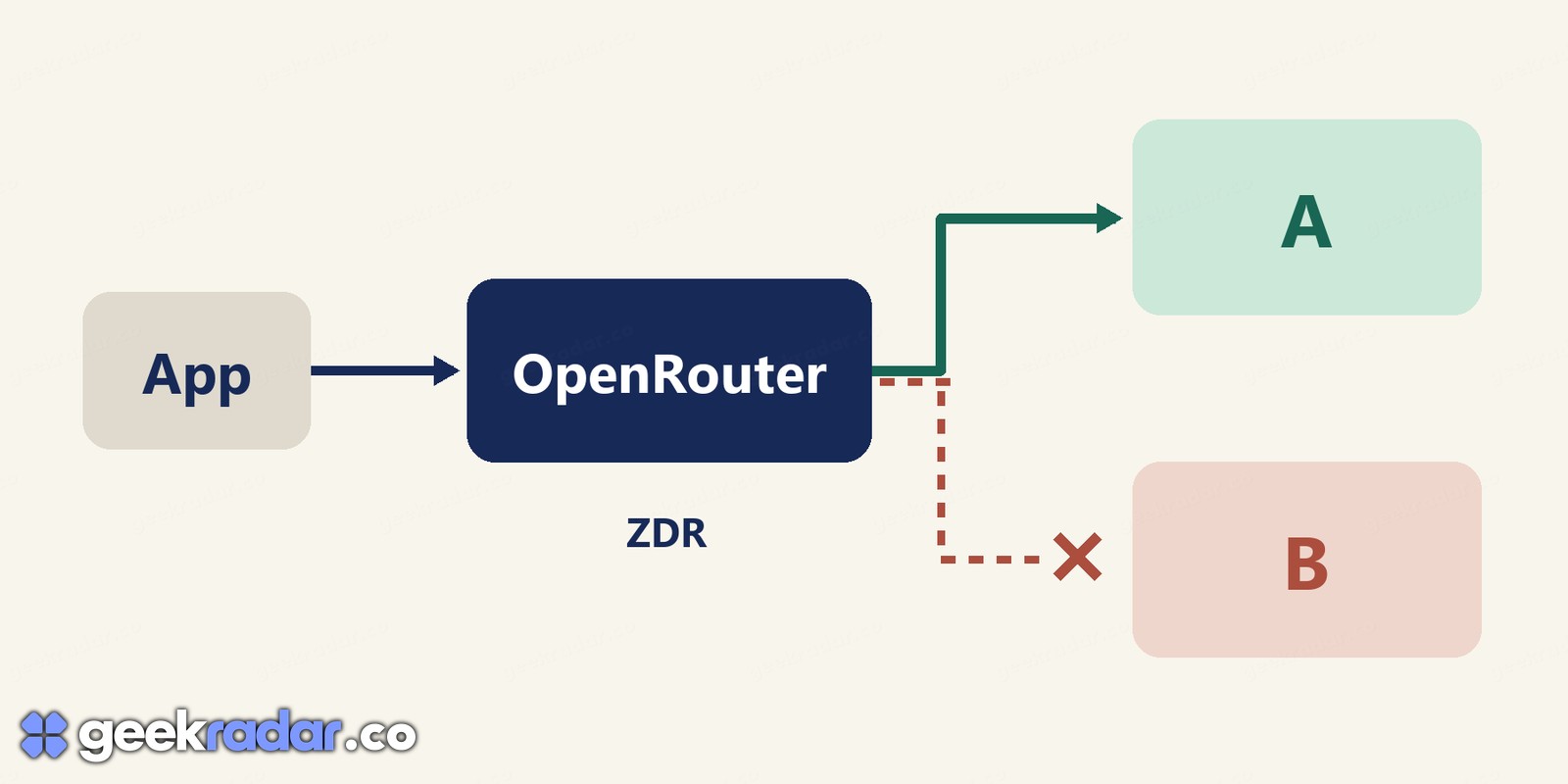
OpenRouter keeps retention information at the endpoint level. Suppose the app’s policy permits only zero-data-retention (ZDR) endpoints, and two operators previously qualified to serve its chosen model. If one loses eligibility, the other can still serve it. If neither qualifies, maintaining that restriction can leave the app without an available route to that model. For a team handling unpublished material, an unavailable summary may be the correct outcome. OpenRouter’s guide to ZDR routing.
The scope also changes when an application calls another service. For example, the inference provider’s retention policy does not automatically extend to a web-search tool the application has enabled. A single button labeled “summarize” can therefore involve more than one data policy. There’s a parallel in consumer AI: saving Gemini chat history and allowing training are separate choices. A promise about training alone leaves the storage question open.
OpenRouter says it is checking whether requests travel on to additional parties and will require evidence before restoring eligibility. The practical question for someone who received a notice concerns an earlier point in time: which operator handled their requests during the period in question? Today’s shorter list can change where the next unpublished paragraph goes. It takes a provider’s incident record to account for the last one.