What a Red Dead river artist looks for in GTA VI’s water
David O’Reilly worked on both games and prefers the pace of Red Dead Redemption 2’s rivers. His two trips through Rockstar’s countryside show where to look for a current.
David O’Reilly spent years making landscapes for Rockstar. When he finally got to explore Grand Theft Auto VI as a player, he headed north and found himself missing something from Red Dead Redemption 2: the pace of its rivers. He liked much of what he saw in Leonida. It was the movement of the water, in a part of the world he knew especially well, that drew a reservation.
O’Reilly recorded his first trip on PS5 Pro on November 19. In the passage picked up by GamesRadar+ on November 27, he says rivers had more prominence in the western and describes the ones he saw in GTA VI as moving a little slowly for his taste. He presents the trip as impressions of the released game. His point is specific enough to look for without a frame counter, a mission objective or access to either game’s code.
Pick something that stays still
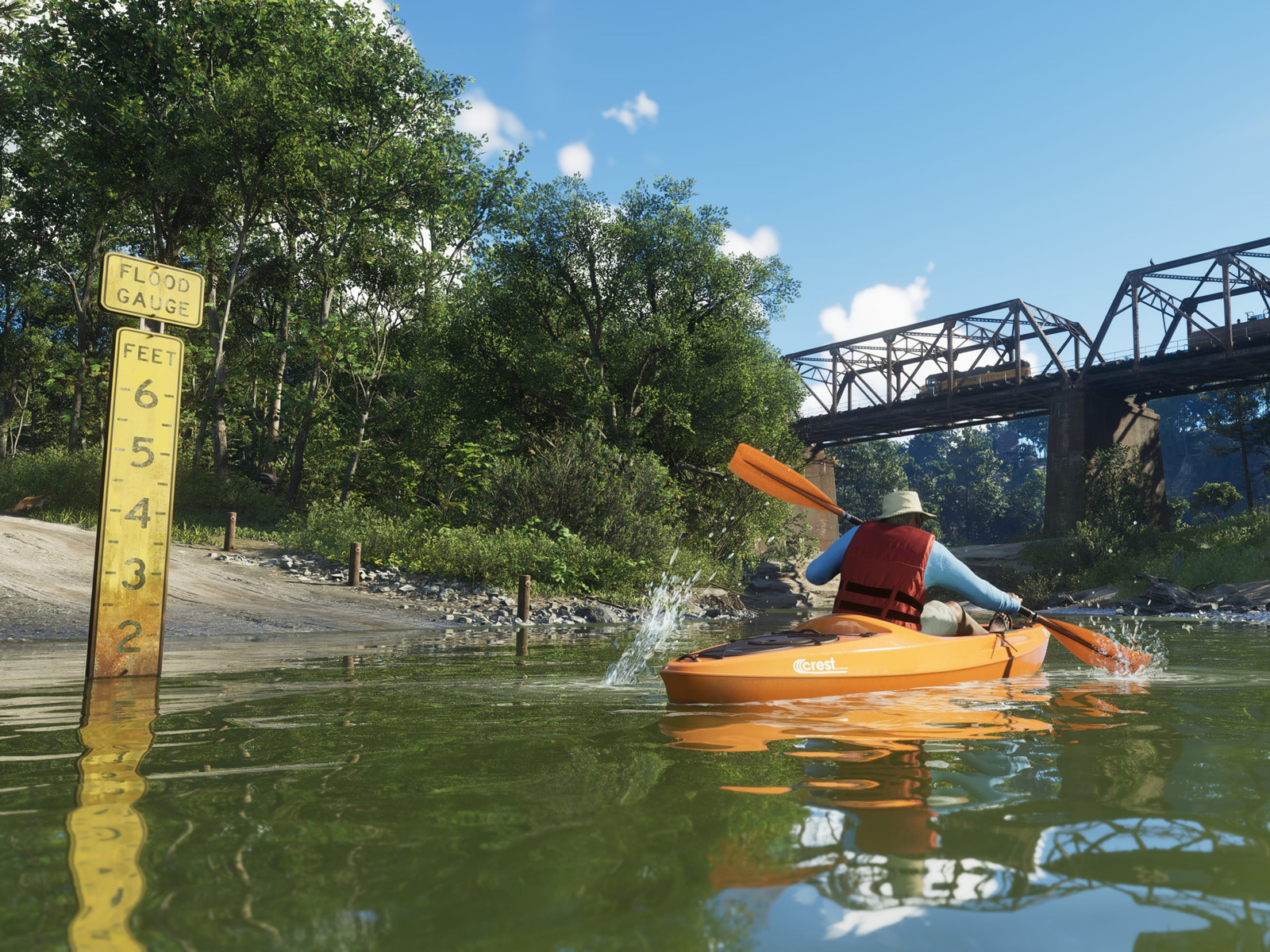
Start with the kayaker in Rockstar’s Mount Kalaga picture. There’s a bridge ahead and a gauge planted in the water. The kayak could change position for at least two reasons: the current carries it, or the paddler takes a stroke. The gauge stays put. Follow the surface beside a stationary object in a moving shot and you can begin to tell how quickly a ripple travels, whether a patch of foam changes direction, and whether the water beside the bank moves differently from the water farther out.
That is also the limit of the official still images. A reflection tells you where the trees stand relative to the surface. It can look convincing whether the reflection shifts quickly, drifts slowly or barely moves at all. Judging a river from one image is a little like judging a piece of music from a photograph of someone playing it. The missing information is time.
What a flow map can tell the eye
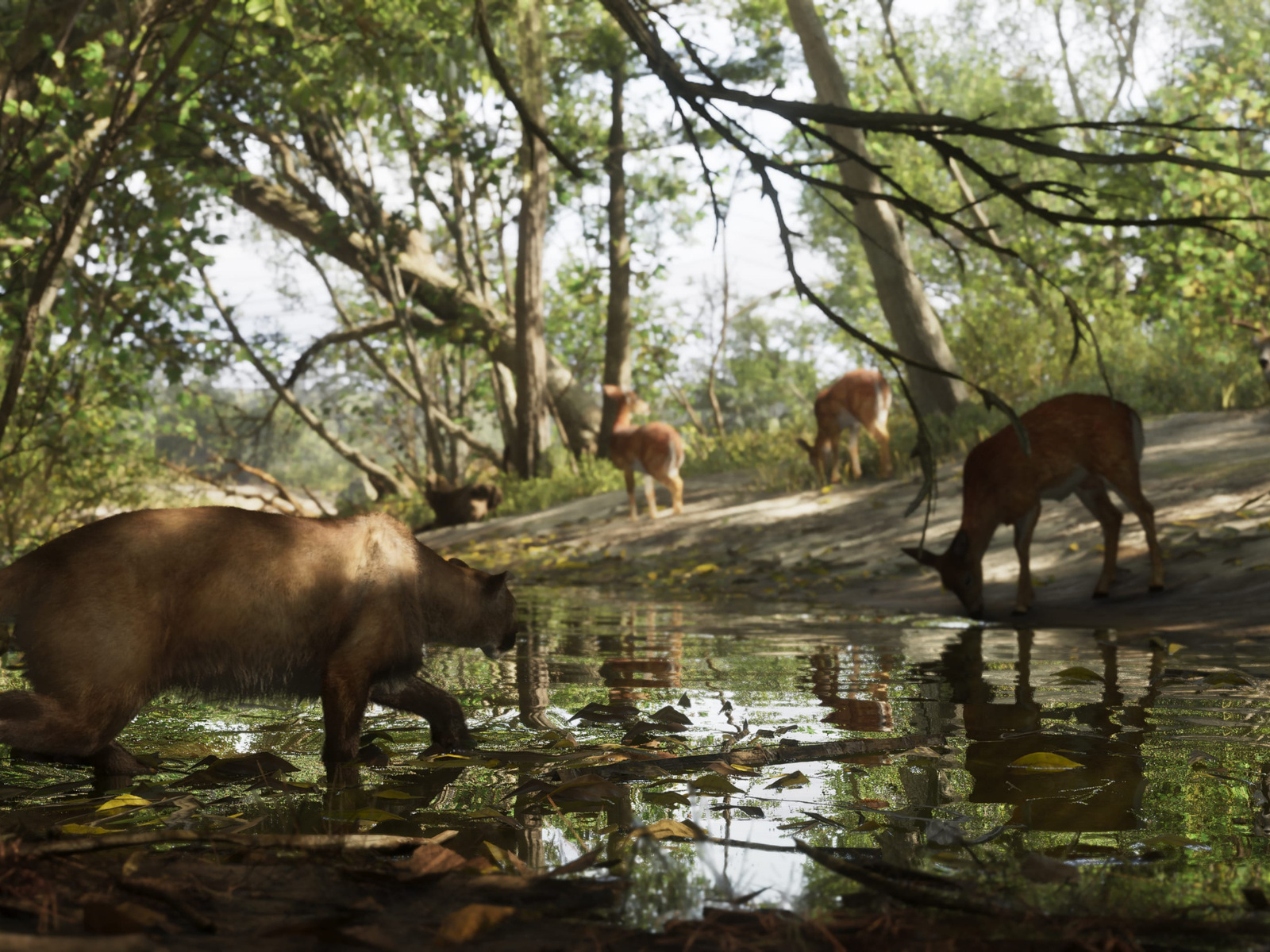
O’Reilly offers a useful companion to the GTA VI footage in his earlier walk along Hawks Eye Creek in Red Dead Redemption 2. Recorded on PC, the commentary considers flow maps alongside the shape of the terrain. A flow map is one way an artist can give a surface a local direction. Picture arrows drawn over a bend in a stream. Arrowheads can turn along the outside bank and point back toward the middle beyond an outcrop.
A river can have intricate reflections and still offer few clues about its current. Equally, a single strip of foam curling past a stone can communicate a great deal about the shape of the bank. That distinction helps explain how someone who admires Leonida’s landscape can prefer a particular stretch of water in an older game. It also keeps the comparison proportionate. Two recordings of different places, on different hardware, give us a way to see an artist’s preference. They yield no controlled measurement of current speed.
On the next trip through Mount Kalaga, let the kayak pass out of view. Keep the bridge in frame for a few seconds longer. The boat tells you where the player is going. What happens to the water beside the bridge tells you where the river is going.