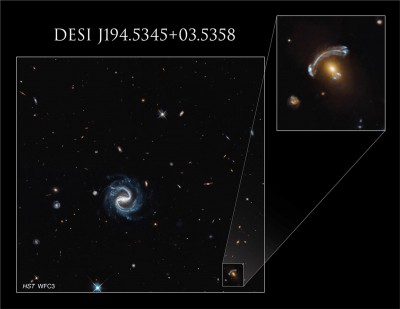
The important galaxy in Hubble’s new image is easy to miss
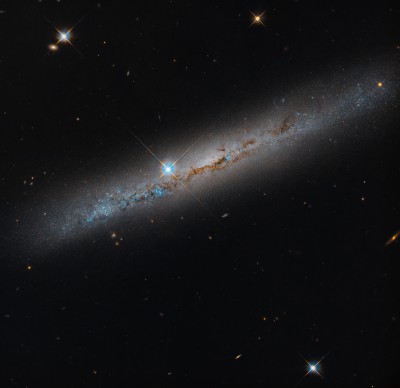
A faint arc near a foreground galaxy shows why sharp Hubble observations matter for Roman’s much wider surveys.
A faint arc near a foreground galaxy shows why sharp Hubble observations matter for Roman’s much wider surveys.
The October 21–22 meteor shower favors a dark interval before dawn. NASA’s sky chart and realistic viewing rates help make the early start worthwhile.
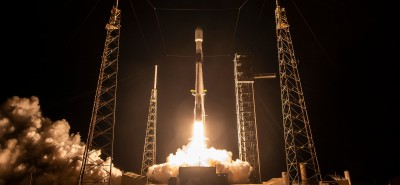
Bandwagon-5 carried 32 payloads, including a second Starfall flight. Recovering a booster and returning an orbital experiment are different milestones.
The October update separates mockups, design reviews and future lunar delivery. Remote operation makes these vehicles more than astronaut transport.
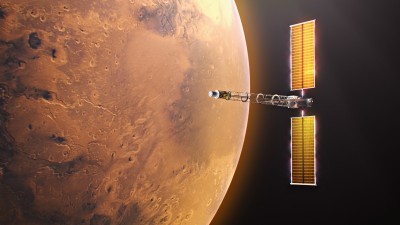
Sierra Lobo will supply the conversion system for the planned 2028 mission. The reactor and the electric spacecraft still have to prove themselves together.
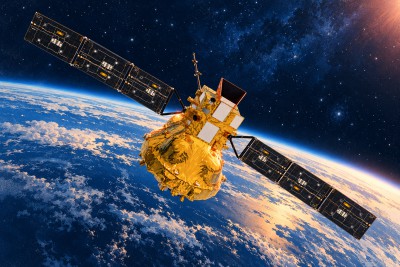
Viasat and SES will test different routes for science data and spacecraft commands. Reaching orbit begins the demonstration; it does not certify a replacement network.
The mission combines images of Earth’s magnetic environment with local particle measurements. ESA’s latest verified update leaves its stray-light problem unresolved.
The edge-on galaxy shares the frame with foreground stars, background galaxies and traces of the telescope's optics. Understanding those layers changes what the image shows.
Instrument checks and optical adjustments are turning a launched observatory into a calibrated measuring system.