How In Waves turns a comic’s page turn into a moving ocean
Phuong Mai Nguyen’s animated adaptation of AJ Dungo’s surf memoir has opened in select US theaters. Two stills show how differently its characters can experience the same water.
A reader of In Waves can leave a wave hanging over a surfer for as long as it takes to trace the curve with a finger. A filmmaker has to decide when it breaks. That difference in timing is one of the pleasures of putting AJ Dungo’s graphic memoir beside Phuong Mai Nguyen’s animated adaptation, which opened in select US theaters on November 27. It reaches Netflix on December 11 in the territories handled by the service. Producer Silex Films lists France and the Benelux countries as exceptions.
The setup takes little explaining. AJ is a young artist and skater in Southern California. Kristen surfs. Getting to know her means getting into water where she feels much more at home than he does. Will Sharpe voices AJ and Stephanie Hsu voices Kristen in the English-language version. What takes more explaining is how a film built around those two people can also make room for the history of a sport.
What happens between two panels
Dungo’s original book follows two strands, his memories of Kristen and an account of surfing’s past. A comics artist has a particularly good tool for moving between them. The reader can see several panels at once, but the next spread stays hidden until the page turns. One drawing can plant a shape or a gesture that only explains itself on the next page.
In a release-week interview with Animation World Network, Dungo describes building links into the ends of his chapters. Nguyen explains that she shortened the historical strand to give the relationship more space, while keeping surfing’s spiritual significance. It is a decision about proportion as much as running time. A viewer needs to understand what draws Kristen into the water long before they need a comprehensive account of how the sport developed.
A cut gives the director a different way to make that connection. Dungo points to the way a splash can lead the eye into an image of a water bottle. The audience follows something familiar across the cut even as the scale of the world changes around it. That is a different adaptation problem from the one posed by the rigid four-page format of Matt Wagner’s early Grendel comics. Here the question is how to keep two currents moving through one story.
Two ways to draw the same water
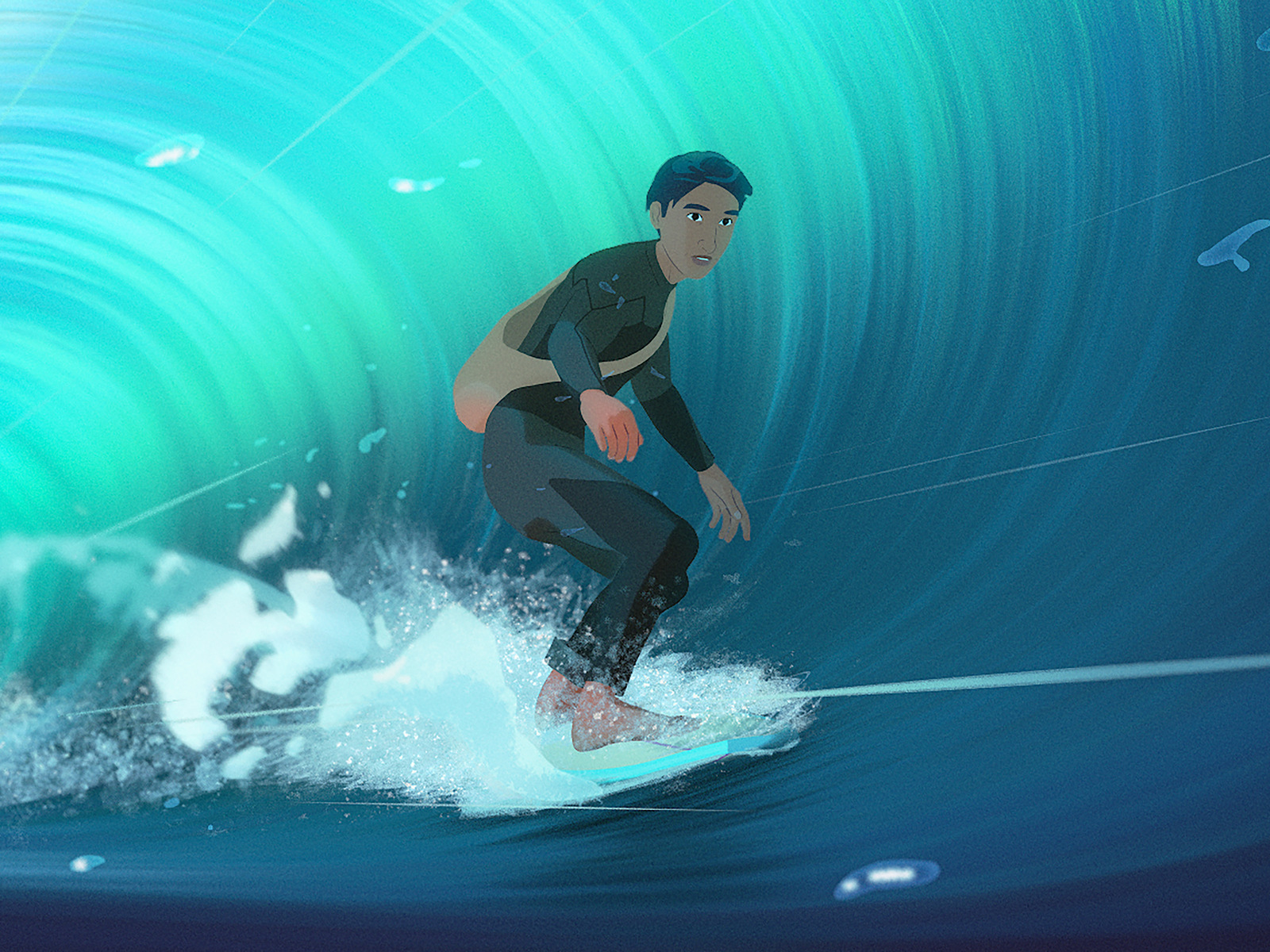
Two stills released for Cannes Critics’ Week make a good pair even without the soundtrack. In the surfing image, narrow lines bend around the inside of a turquoise wave. Follow one and it leads your eye past the rider, along the wall of water. The white spray under the board gives the eye somewhere sharp to land.
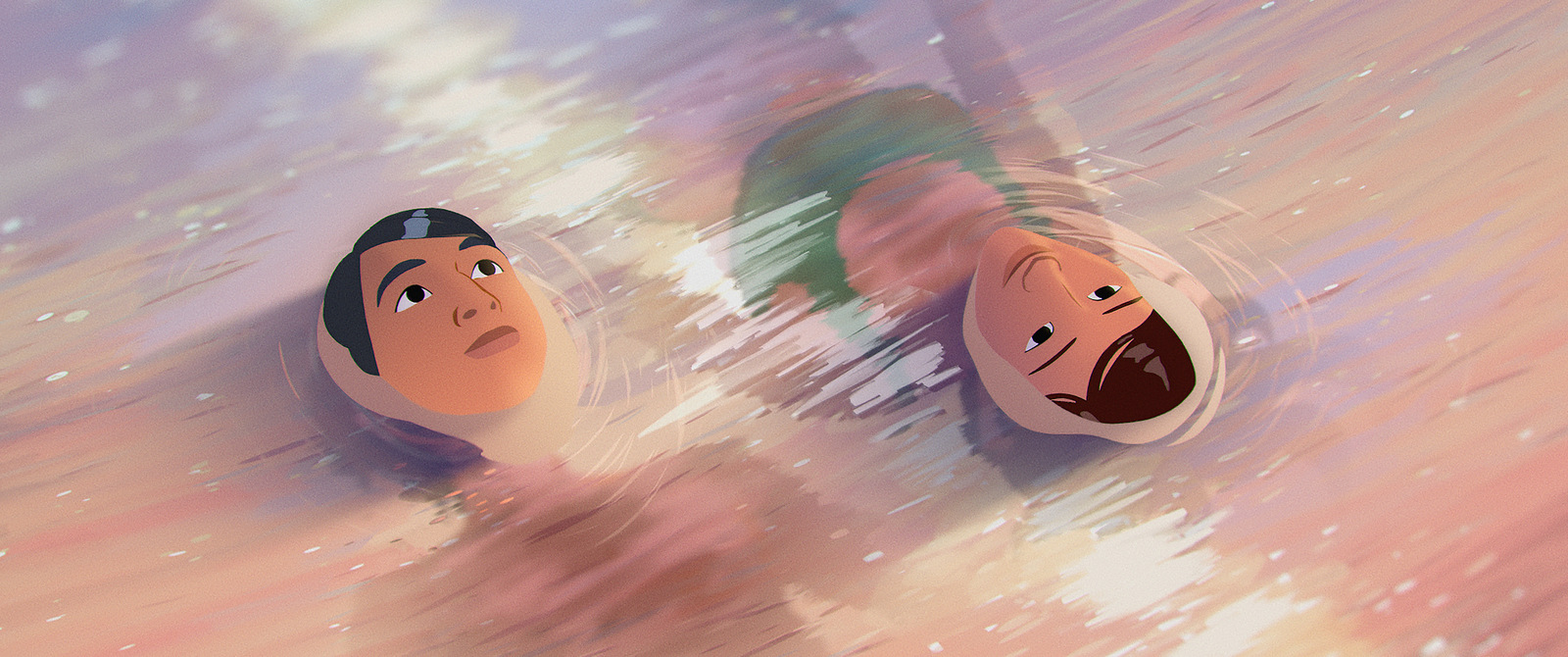
In the other image the water barely has an outline. Two faces lie near the surface. Pink and cream reflections cut across hair, skin and the space between them. The first drawing gives you a clear sense of which way a body is moving. The second asks how close two people can be while barely moving at all. Watching the film offers a small experiment a still cannot settle: notice how long Nguyen lets your eye rest before the water carries it somewhere else.