How GTA VI makes room for a crowd in Vice City
A beachgoer needs a body, a voice and a way to move. Rockstar’s technology lead explains how the studio made so many different people fit in console memory.
A person walking past a lifeguard tower needs to look convincing twice in Grand Theft Auto VI. From the waterline, a silhouette and a stride might be enough to pick them out. Get close and you can see how their clothes fit, hear their voice and watch their face as someone else speaks. The crowd hasn't grown by a single person between those two views. What the game has to deliver has changed considerably.
That distinction helps explain an answer David Hynd, Rockstar’s vice president of technology, gave in a launch-week interview with Restart. The studio wanted busier streets, but it also wanted a wider range of bodies, outfits, voices and behaviors among the people already on screen. Hynd describes three jobs that went together: rebuilding the systems that choose levels of detail, spreading more work across processing threads, and changing which assets get priority as the world streams into memory.
A crowd spends memory before it takes a step
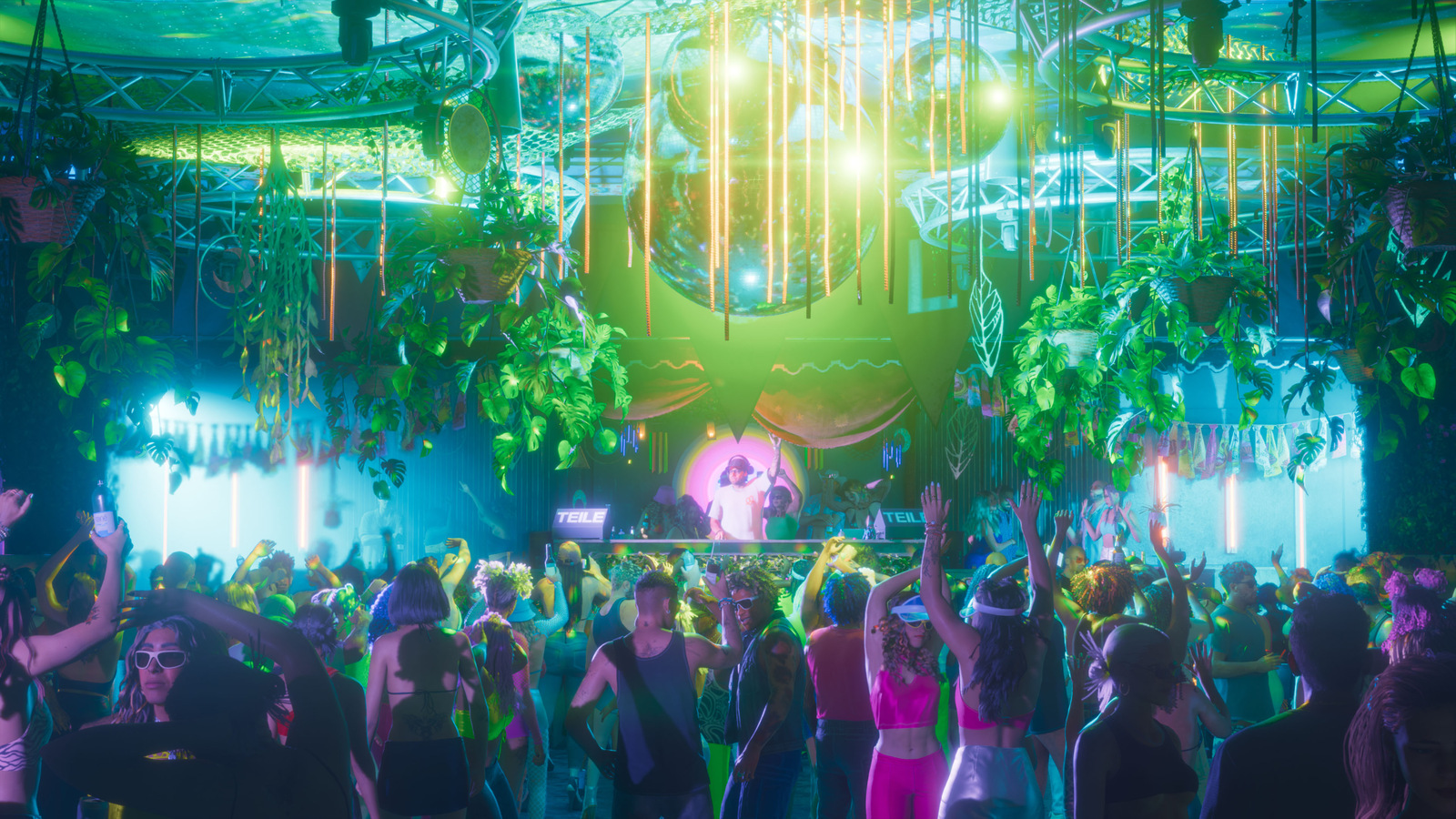
Consider a concert seen from the back. A hundred identical figures could fill the floor, but once you noticed the same shoulders and the same gesture repeating across the room, counting another row wouldn't improve the illusion. Vary the bodies, clothes and movements and there’s more material the game may need available at once. A motion can be reused across different bodies through the animation retargeting Rockstar described before launch. The outfits and voices still have to come from somewhere.
This is where two similar-sounding decisions part ways. Level of detail concerns the representation appropriate to the view. A hand occupying a few pixels at the far end of the room doesn't need to show what a hand resting on the counter in front of you does. Streaming priority concerns what should be ready when you get there. If you turn away from the stage and head for the exit, the people who were behind you suddenly matter more than the distant performer. There's a practical difference between having a detailed asset on the drive and having it in memory in time for that turn.
Hynd also describes distributing more work across threads to make better use of the CPU and GPU. That addresses a third constraint: even when the right material is available, the machine still has to finish its work for the next frame. The interview gives no per-character memory figure or fixed pedestrian limit. You couldn't derive either by counting the figures in Rockstar’s concert screenshot. What the picture does show is how little of an individual you need to see for a room to feel full.
What changes when you stop to listen
Sound makes that shifting attention particularly easy to follow. In Ars Technica’s review of the finished game, the reviewer describes individual conversations merging into chatter, with speech muffled through walls or across a room. Rockstar's audio team told TechRadar how it approached dialogue: it developed a system for how speech carries through space, so a voice belongs to the location of its speaker. The listening observation and the developer's explanation concern sound. Neither reveals precisely when the engine loads a pedestrian's animation or switches out a model.
A revealing comparison the next time you visit a busy spot is to leave the camera still and listen, then walk toward one of the voices. A few steps can turn someone who helped fill the room into the one person whose words you can follow. Giving that transition enough detail, at the moment you choose to make it, is a harder assignment than filling every seat.